Introduction: Why Autoinjectors Are Reshaping Patient Care
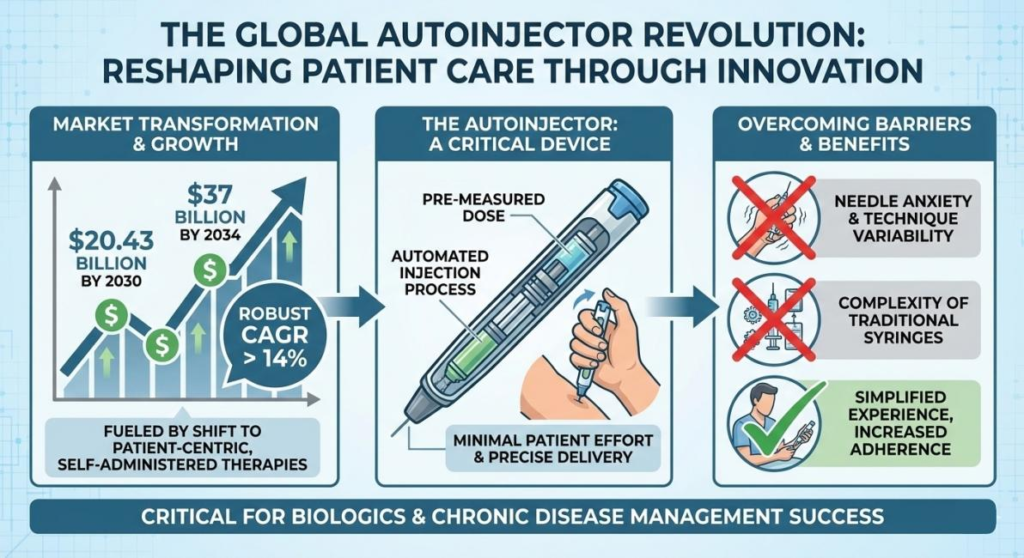
The global auto injector market is undergoing a remarkable transformation, projected to reach $20.43 billion by 2030 and $37 billion by 2034, with a robust compound annual growth rate (CAGR) exceeding 14%. This explosive growth is fueled by a fundamental shift toward patient-centric, self-administered therapies, especially for complex biologics in our aging population. For pharmaceutical companies, mastering this device is now critical for both therapeutic success and commercial viability. By definition, an auto injector is a medical device designed to deliver a precise, pre-measured dose with minimal patient effort. It directly addresses key barriers such as needle anxiety and technique variability by automating the injection process. This guide will explore the inner workings, benefits, and evolving landscape of this essential technology.The global autoinjector market is changing rapidly.
1. What Is an Autoinjector? Core Definition and Purpose
Auto injectors primarily deliver medication via two routes, chosen based on the drug’s properties and desired absorption profile:
- Subcutaneous (SC):Injection into the fatty tissue layer between the skin and muscle. This is themost common route for auto injectors, favored for its suitability for slower, sustained absorption and high patient tolerability. It is ideal for many biologics and chronic therapies.
- Intramuscular (IM):Injection directly into muscle tissue, allowing for faster absorption. This route is often used for emergency medications (e.g., epinephrine for anaphylaxis) and certain vaccines.
The design of the auto injector is precisely calibrated to ensure the needle reaches the correct tissue depth for its intended route, providing consistency that manual injections struggle to match.
2. Key Components and How They Work
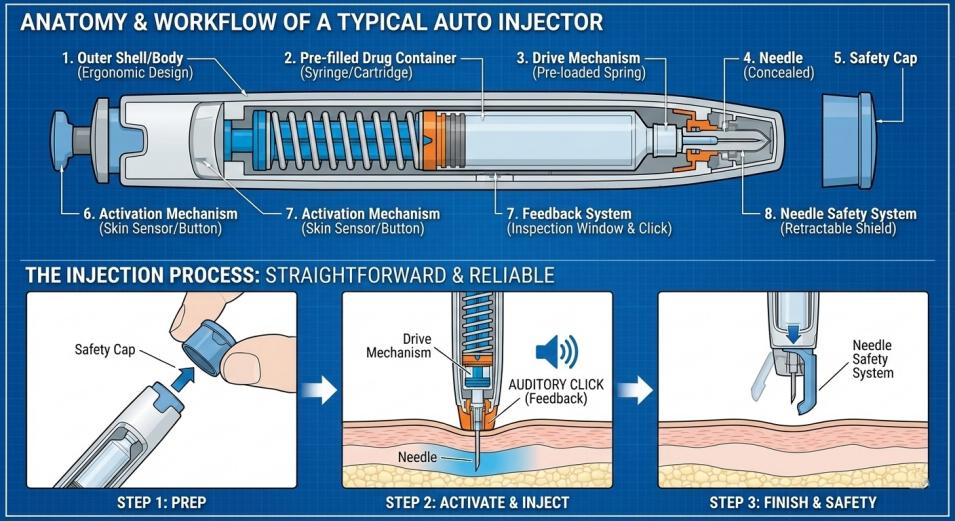
A typical auto injector is a marvel of user-focused engineering, integrating several key components that work in harmony:
- Outer Shell/Body:The main housing, often ergonomically designed for a secure grip.
- Pre-filled Drug Container:A glass or plastic syringe or cartridge containing the exact medication dose.
- Drive Mechanism:A pre-loaded spring or other energy source that provides the force for needle insertion and drug expulsion.
- Needle:Concealed within the device prior to use to reduce anxiety and ensure sterility.
- Safety Cap:Prevents accidental activation during storage and handling.
- Activation Mechanism:Usually a simple button or a mechanism triggered by pressing the device firmly against the skin.
- Feedback System:Visual (e.g., inspection window), auditory (click), or tactile signals to confirm dose delivery completion.
- Needle Safety System:Automatically retracts or shields the needle after use to prevent needlestick injuries.
The injection process is intentionally straightforward:The user removes the safety cap, places the device against the cleansed injection site, and activates it. The mechanism automatically inserts the needle, delivers the full dose at a controlled rate, and then secures the needle. This “all-or-nothing” function is what makes the medicine injector so reliable for patients of all ages and dexterity levels.
3. Routes of Administration: Subcutaneous vs. Intramuscular
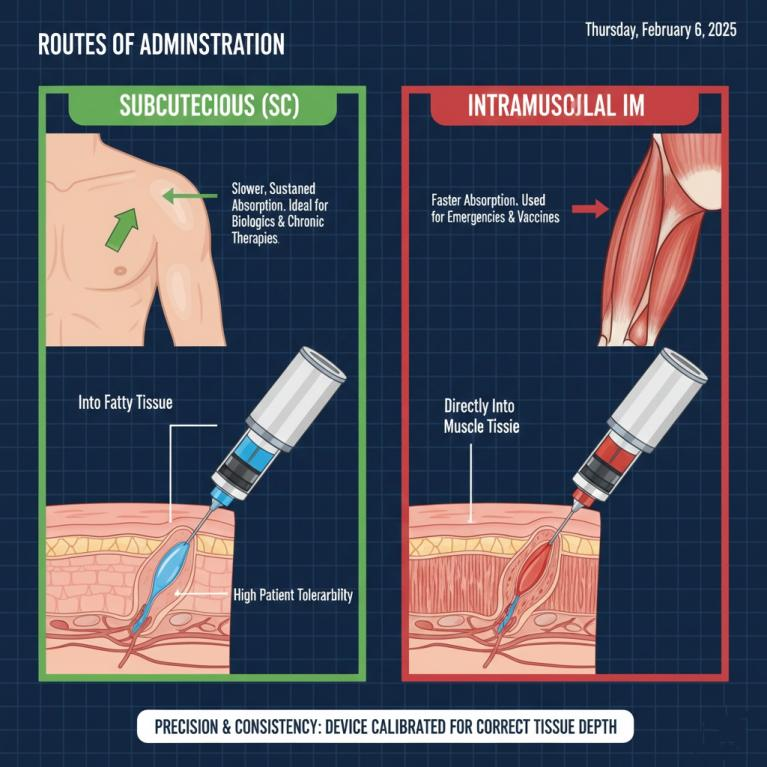
Auto injectors primarily deliver medication via two routes, chosen based on the drug’s properties and desired absorption profile:
- Subcutaneous (SC):Injection into the fatty tissue layer between the skin and muscle. This is the most common route for auto injectors, favored for its suitability for slower, sustained absorption and high patient tolerability. It is ideal for many biologics and chronic therapies.
- Intramuscular (IM):Injection directly into muscle tissue, allowing for faster absorption. This route is often used for emergency medications (e.g., epinephrine for anaphylaxis) and certain vaccines.
The design of the auto injector is precisely calibrated to ensure the needle reaches the correct tissue depth for its intended route, providing consistency that manual injections struggle to match.
4. Primary Therapeutic Applications
The adoption of auto injectors is dominant in therapeutic areas requiring frequent or emergency administration:
- Autoimmune Diseases:A leading application, includingrheumatoid arthritis, psoriasis, and multiple sclerosis. Devices for these conditions are a major growth driver, improving adherence to complex biologic regimens.
- Diabetes:For delivering various peptide hormones like insulin and GLP-1 agonists.
- Anaphylaxis:Epinephrineauto injectorsare lifesaving emergency devices.
- Migraine:For delivering acute relief therapies like CGRP antagonists.
- Hormonal Therapies:Used in areas like fertility treatment and osteoporosis.
The trend toward home-based care is significantly accelerating their use across all these segments, reducing the burden on clinics and hospitals.
5. Market Trends and Future Innovations
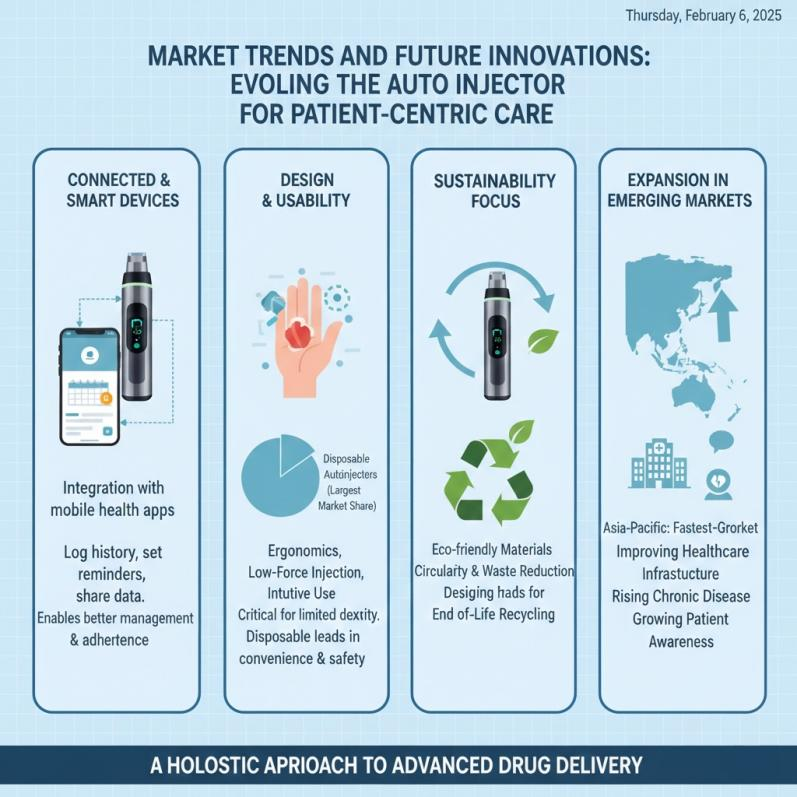
The auto injectormarket is characterized by rapid innovation focused on patient experience, connectivity, and sustainability:
- Connected & Smart Devices:Integration withmobile health apps is a major trend. Devices like digital auto injectors can log injection history, provide reminders, and share data with healthcare providers, enabling better disease management and adherence tracking.
- Design & Usability:Innovations focus onergonomics, lower injection force, intuitive use, and features for patients with limited dexterity. Disposable autoinjectors currently hold the largest market share due to their convenience and safety.
- Sustainability Focus:The industry is increasingly adoptingeco-friendly materials and designing for circularity—considering end-of-life recycling and waste reduction from the outset.
- Expansion in Emerging Markets:Regions likeAsia-Pacific are expected to be the fastest-growing markets, driven by improving healthcare infrastructure, rising chronic disease prevalence, and growing patient awareness.
6. Benefits: Why Choose an Autoinjector?
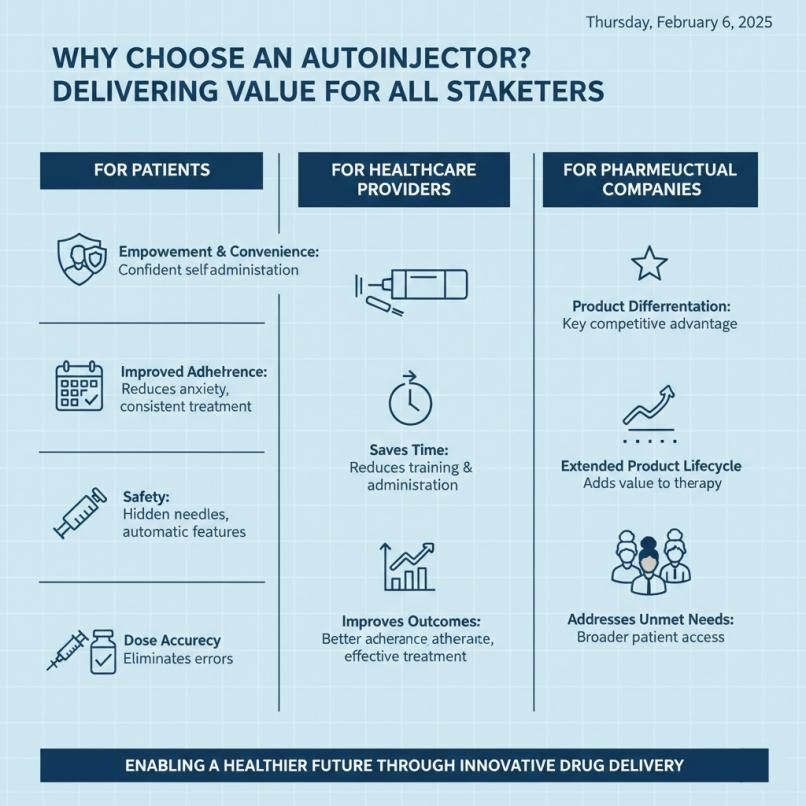
The value proposition of a medicine injector is clear for all stakeholders:
- For Patients:
- Empowerment & Convenience:Enables confident self-administration at home.
- Improved Adherence:Reduces anxiety and simplifies the process, leading to better treatment consistency.
- Safety:Hidden needles and automatic safety features minimize needlestick risk.
- Dose Accuracy:Eliminates dosing errors associated with manual drawing from vials.
- For Healthcare Providers:
- Saves Time:Reduces training and administration time.
- Improves Outcomes:Better patient adherence translates to more effective treatment.
- For Pharmaceutical Companies:
- Product Differentiation:A user-friendly device can be a key competitive advantage.
- Extended Product Lifecycle:Can add value to a therapy, especially near patent expiry.
- Addresses Unmet Needs:Makes powerful therapies accessible to a broader patient population.
7. The Path Forward: Autoinjectors and Sustainable Healthcare
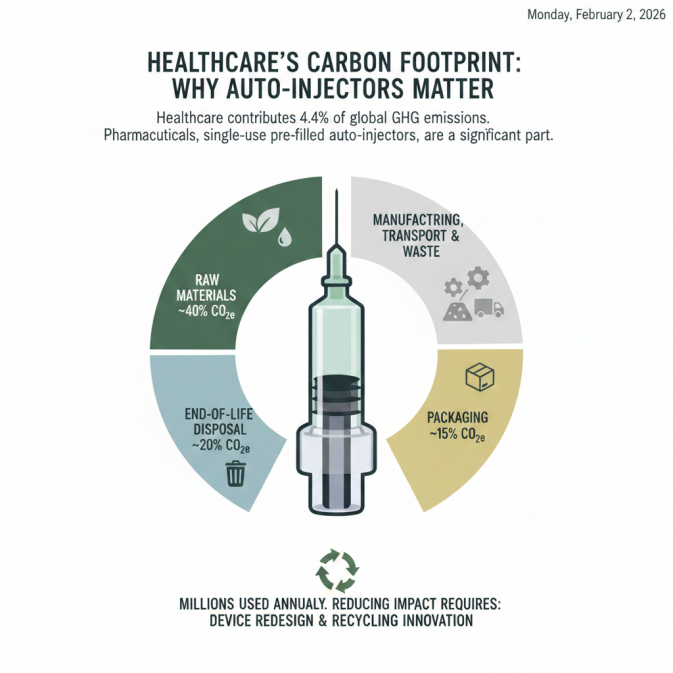
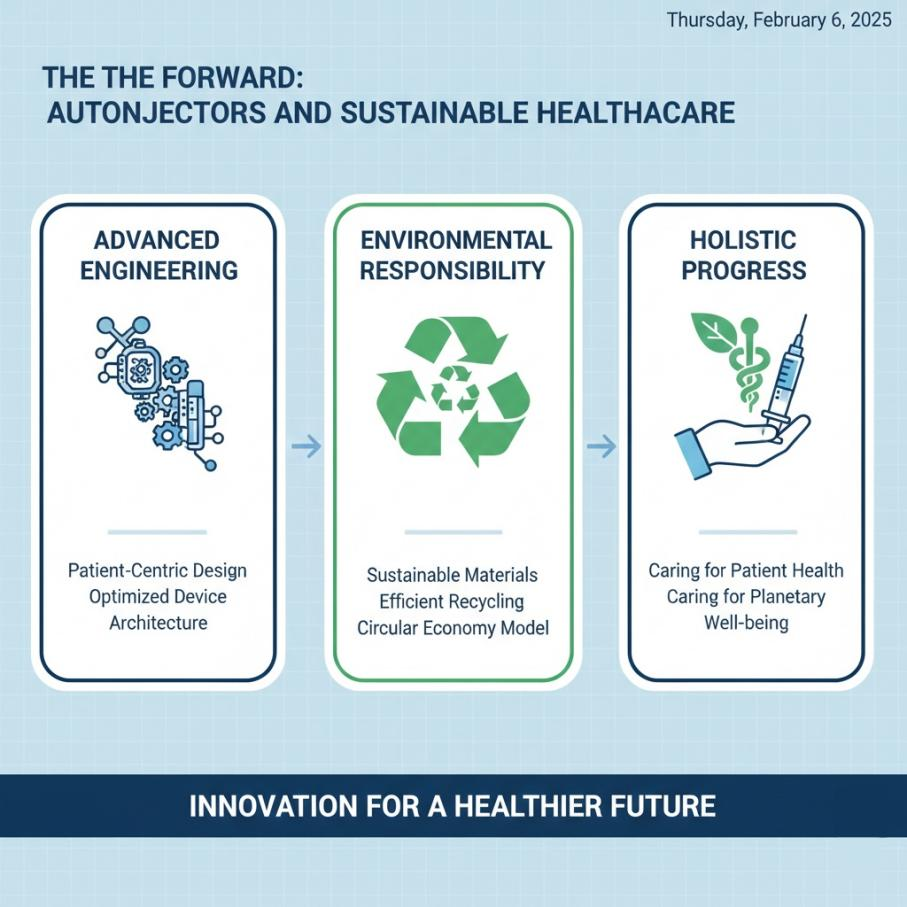
As the industry progresses, the future of the auto injector lies at the intersection of advanced engineering and holistic responsibility. Beyond patient-centric design, there is a growing imperative to address environmental impact. This involves exploring sustainable materials, optimizing device architecture for efficient recycling, and contributing to a circular economy model within healthcare. Leading developers are now embedding these principles into the core of their innovation pipeline, recognizing that true progress means caring for both patient health and planetary well-being.
Conclusion
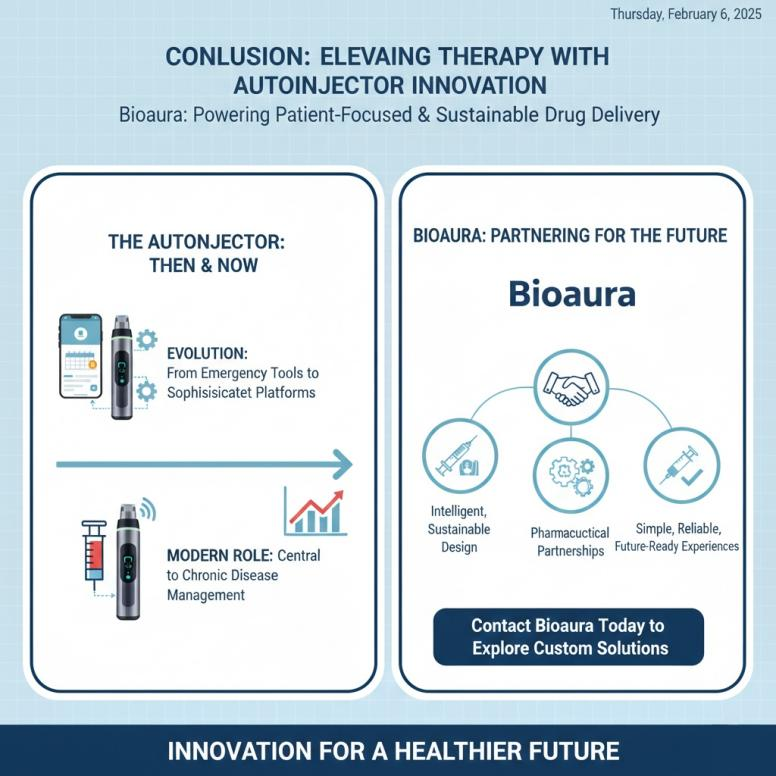
Auto injectors have evolved from simple emergency tools to sophisticated, connected platforms central to modern chronic disease management. For pharmaceutical partners, selecting the right auto injector technology is a strategic decision that directly impacts patient adoption, therapeutic success, and brand perception.
At Bioaura, we are committed to advancing this field through intelligent, sustainable, and patient-focused design. We partner with pharmaceutical innovators to turn complex delivery challenges into simple, reliable, and future-ready experiences.
Ready to explore how a purpose-built autoinjector can elevate your therapy?
Contact Bioaura today to begin a conversation with our drug delivery experts.