Introduction: The Dual Mission of Modern Pharma
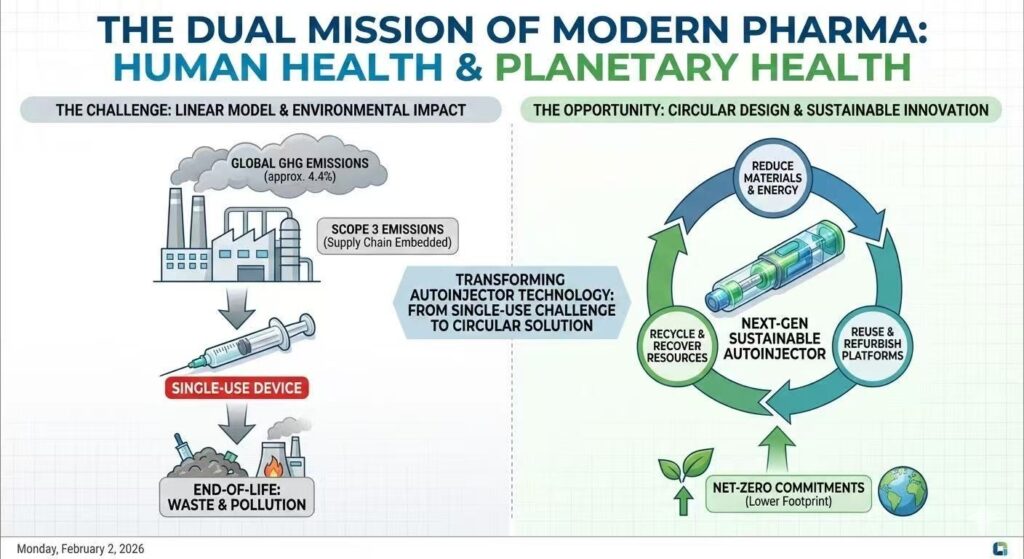
The pharmaceutical industry stands at a pivotal intersection of human and planetary health. While its core mission is to deliver life-saving therapies, it is also responsible for approximately 4.4% of global greenhouse gas emissions. Within this footprint, drug delivery devices—particularly the ubiquitous autoinjector—present both a significant environmental challenge and a substantial opportunity for sustainable innovation. As the industry accelerates toward ambitious net-zero commitments, addressing the Scope 3 emissions embedded in the supply chain has become imperative. This article explores how the next generation of autoinjector technology is being reimagined through circular design principles, transforming a single-use device into a cornerstone of sustainable healthcare delivery.
1.Understanding the Environmental Impact of Injection Devices
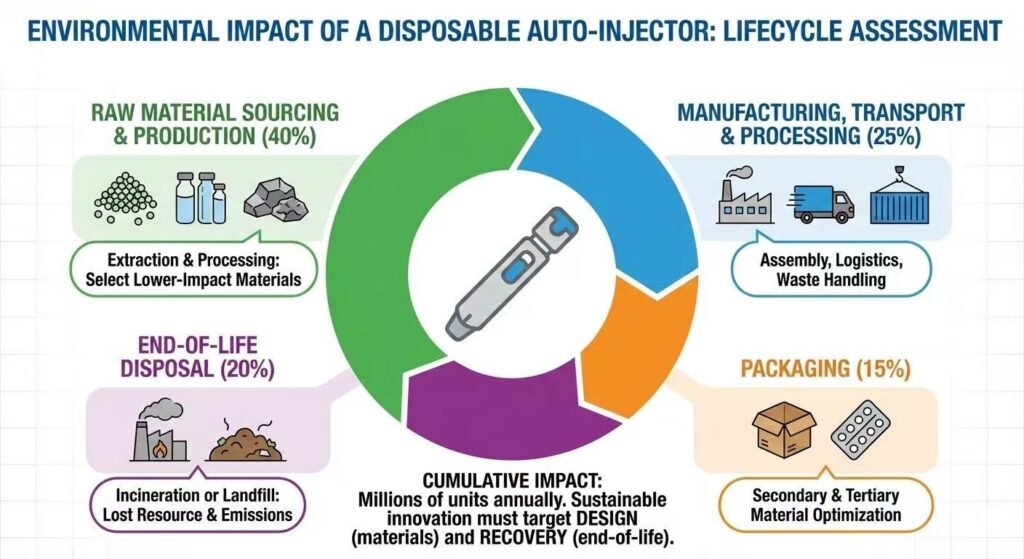
A detailed lifecycle assessment reveals the complete carbon narrative of a typical disposableautoinjector. The findings are crucial for targeting reduction strategies:
- Raw Material Sourcing & Production (40%):This largest segment includes the extraction and processing of plastics, glass, and metals. Selecting alternative, lower-impact materials is key.
- End-of-Life Disposal (20%):Most devices end up in incineration or landfill, representing a lost resource and direct emissions source.
- Packaging (15%):Secondary and tertiary packaging contribute significantly, pointing to another area for material optimization.
- Manufacturing, Transport & Processing (25%):The remaining emissions are associated with assembly, global logistics, and waste handling.
每年有数百万台设备用于慢性病和急诊护理,其累积影响不容忽视。这种细分表明,可持续创新必须着眼于设备生命周期的开始(设计和材料)和结束(回收)。
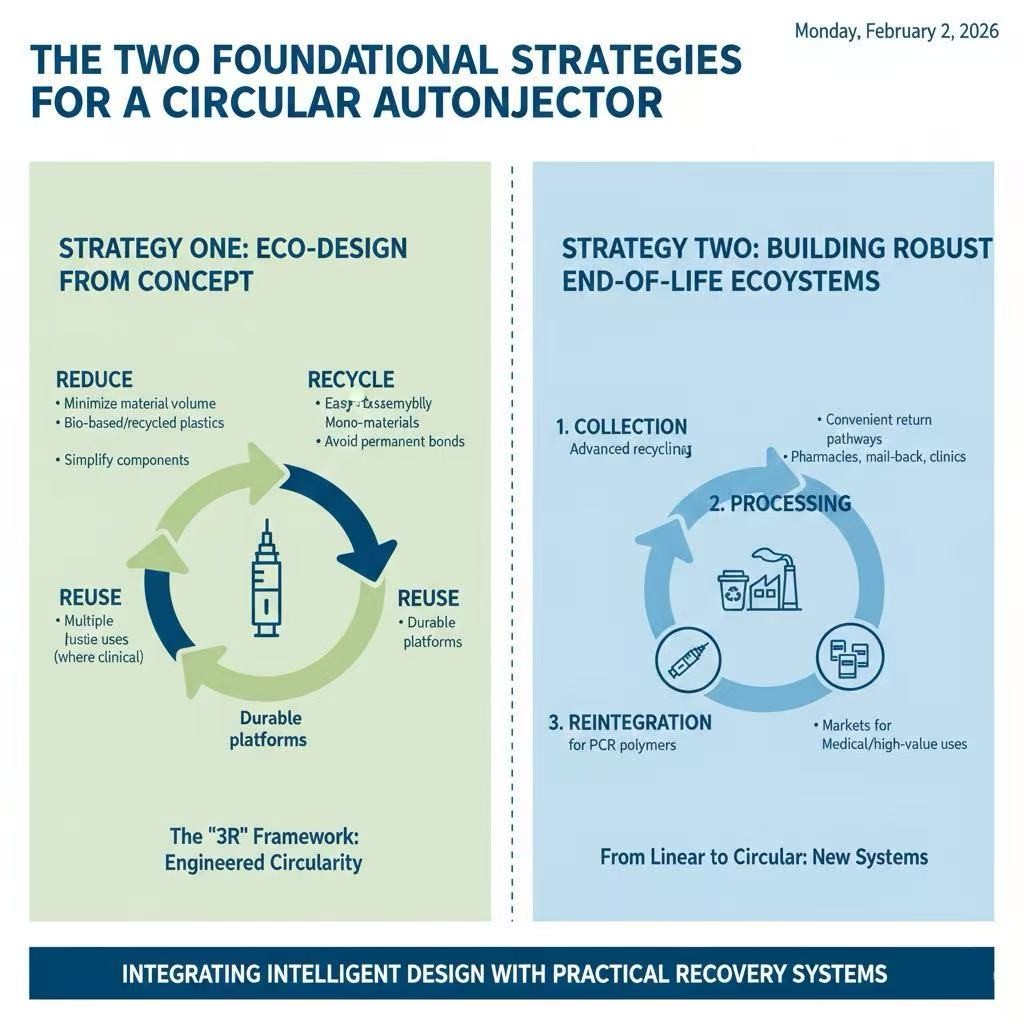
2.The Two Foundational Strategies for a Circular Autoinjector
Achieving sustainability requires a dual-pronged approach that integrates intelligent design with practical recovery systems.
Strategy One: Eco-Design from Concept
True circularity is engineered, not an afterthought. Up to 80% of a product’s environmental destiny is locked in during the design phase. For autoinjector development, this means rigorously applying the “3R” framework:
- Reduce:Minimize material volume, select bio-based or recycled plastics, and simplify component counts.
- Reuse:Where clinically viable, develop durable platforms designed for multiple uses with replaceable drug cartridges.
- Recycle:Design for easy disassembly, prioritize mono-materials (single polymer types), and avoid permanent bonds between different materials like metals and plastics.
Strategy Two: Building Robust End-of-Life Ecosystems
An eco-designed device is only sustainable if it is recovered. Moving from a linear “take-make-dispose” model to a circular one demands new systems:
- Collection:Establishing convenient, safe return pathways for patients, via pharmacies, mail-back programs, or clinical drop-off.
- Processing:Investing in advanced recycling technologies capable of sterilizing, disassembling, and separating device materials at scale.
- Reintegration:Creating markets for post-consumer recycled polymers, ideally back into medical-grade applications or, alternatively, into other high-value industrial uses.
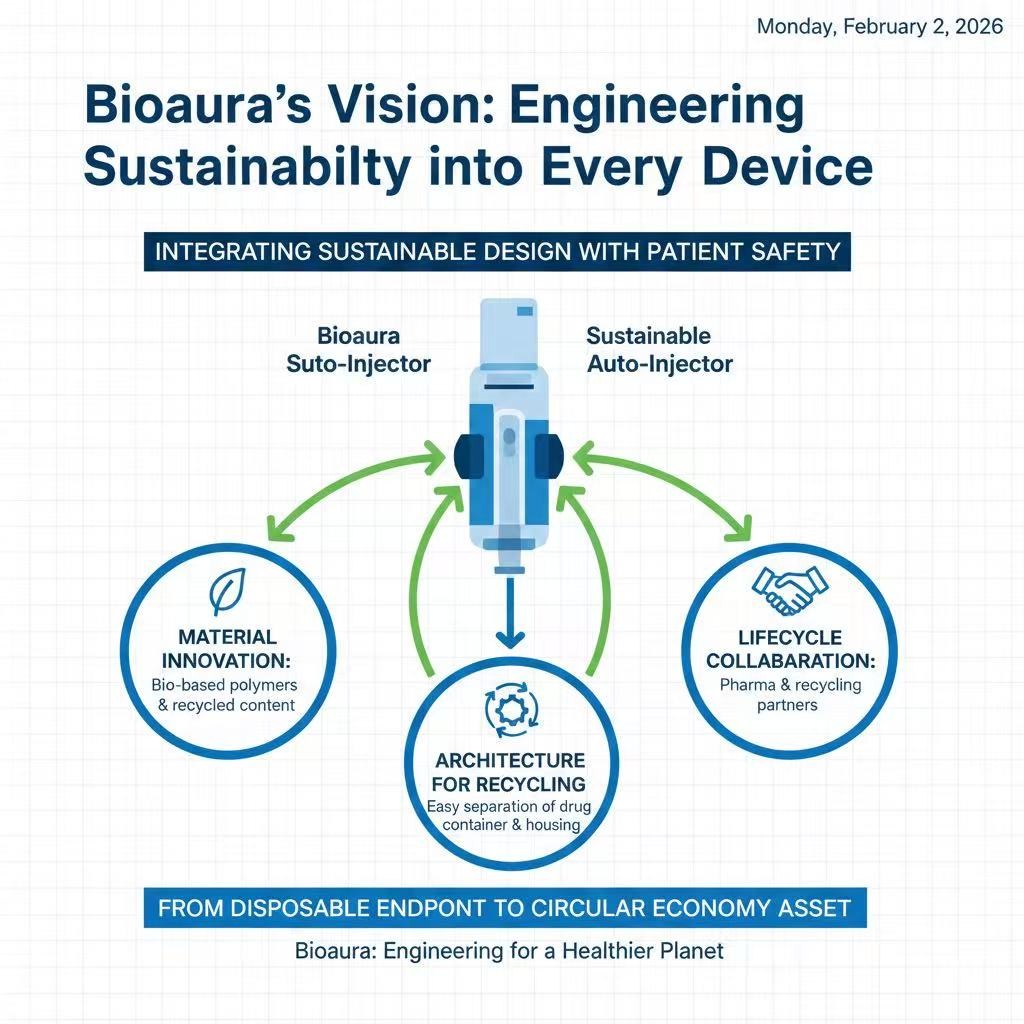
3.Bioaura’s Vision: Engineering Sustainability into Every Device
At Bioaura, we are embedding these principles into our development DNA. Our approach to sustainable autoinjector design focuses on tangible innovations that reduce environmental impact without compromising patient safety or ease of use.
For instance, our sustainable design protocol mandates:
- Material Innovation:Actively integrating certified bio-based polymers and exploring approved grades of recycled content.
- Architecture for Recycling:Developing device architectures where the primary drug container and mechanical housing can be easily separated, a critical step for high-quality material recovery.
- Lifecycle Collaboration:We partner with pharmaceutical companies and recycling specialists from the early stages of device development to ensure our products are not only recovery-ready but also aligned with emerging recycling infrastructures.
We view the autoinjector not as a disposable endpoint, but as a temporary vessel for valuable materials within a broader circular economy.
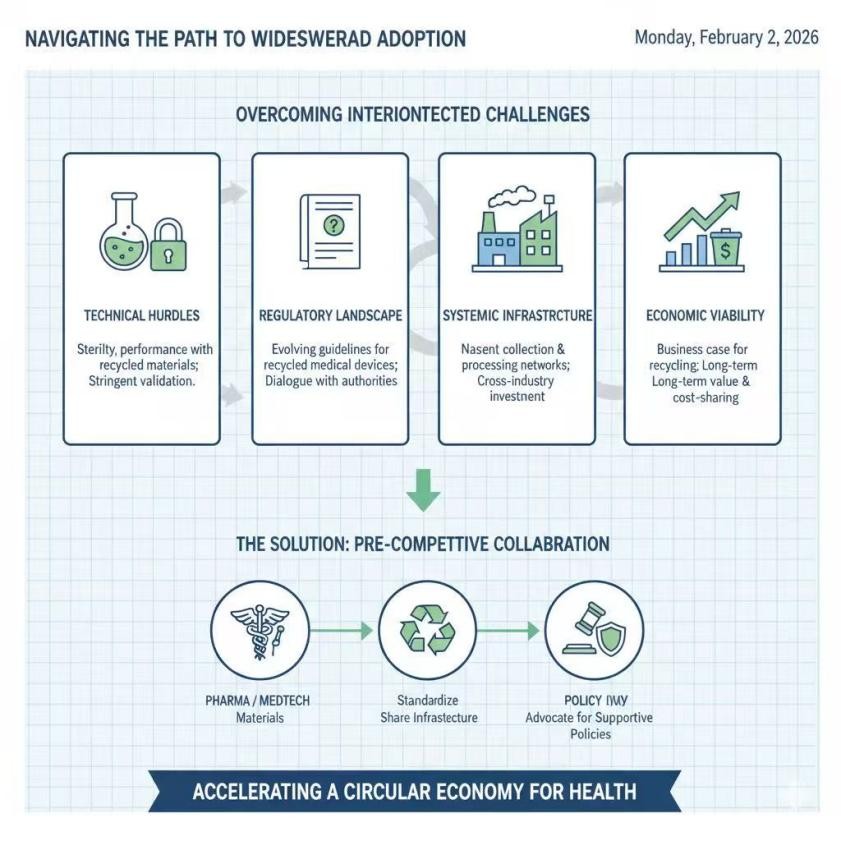
4. Navigating the Path to Widespread Adoption
Scaling circular autoinjector solutions involves overcoming interconnected challenges:
- Technical Hurdles:Ensuring strict sterility and performance while using recycled materials requires sophisticated engineering and stringent validation.
- Regulatory Landscape:Guidelines for using recycled materials in medical devices are still evolving, requiring proactive dialogue with health authorities.
- Systemic Infrastructure:Comprehensive collection and processing networks are nascent and require cross-industry investment to build.
- Economic Viability:Establishing the business case for recycling requires demonstrating long-term value and cost-sharing models across the value chain.
Overcoming these barriers is not a task for any single company. It demandspre-competitive collaboration across the pharma, medtech, and waste management sectors to standardize materials, share infrastructure, and advocate for supportive policies.
Conclusion: The Autoinjector as a Beacon for Sustainable Change
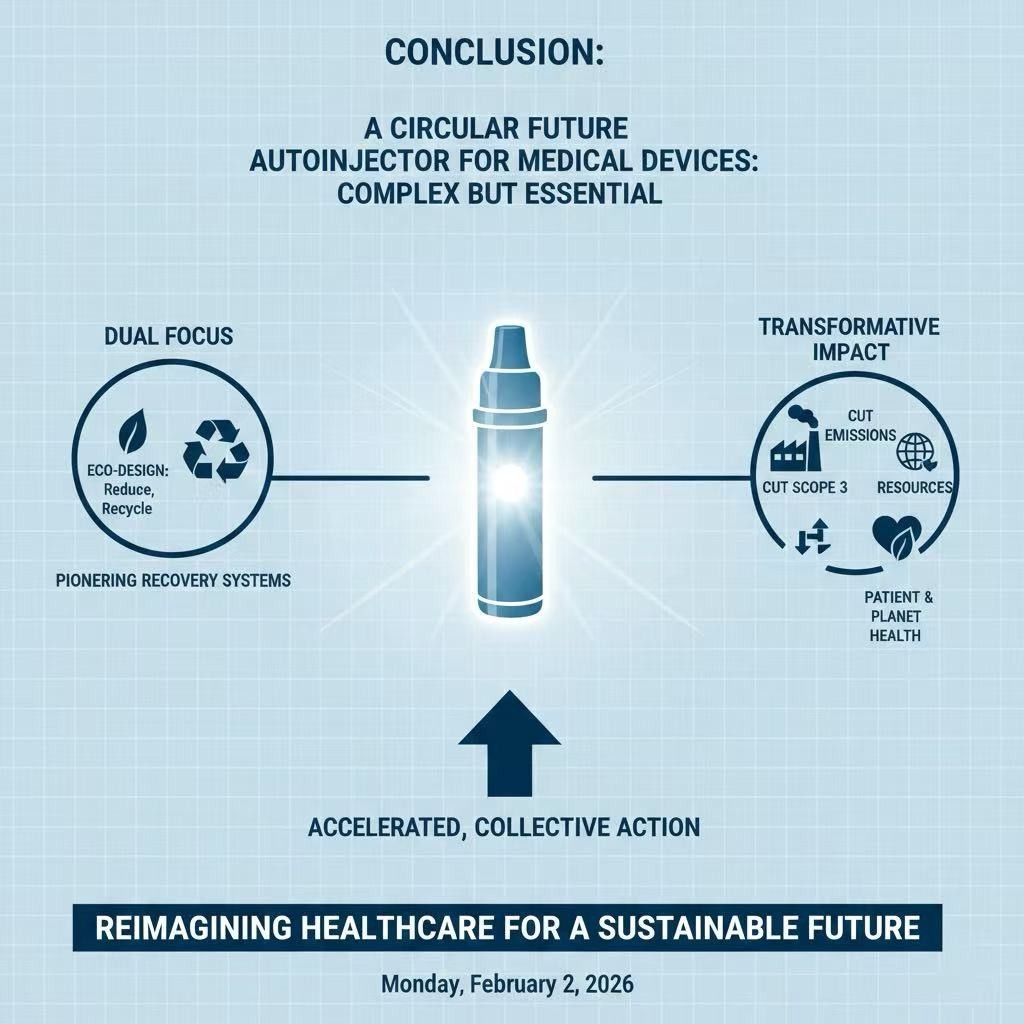
The journey toward a circular future for medical devices is complex but essential. Theautoinjector, due to its vast scale and direct patient use, is the perfect candidate to lead this transformation. By relentlessly focusing on eco-design and pioneering recovery systems, the industry can dramatically cut Scope 3 emissions, conserve finite resources, and align the act of caring for patients with the imperative of caring for our planet.
The technology and the will are coalescing. The next step is accelerated, collective action. By reimagining the autoinjector, we can turn a everyday medical tool into a powerful symbol of a healthier, more sustainable future for all.
Partner with Bioaura for Sustainable Delivery Solutions
Are you looking to minimize the environmental impact of your injectable therapy? Bioaura’s expertise in patient-centric autoinjector design now includes a dedicated focus on circular economy principles. From material selection to end-of-life strategy, we help you deliver on your therapeutic and sustainability goals.
Contact our team to explore how we can develop a greener delivery solution for your next biologic.