Injection Pen Manufacturing Process: From Development to Commercial Production
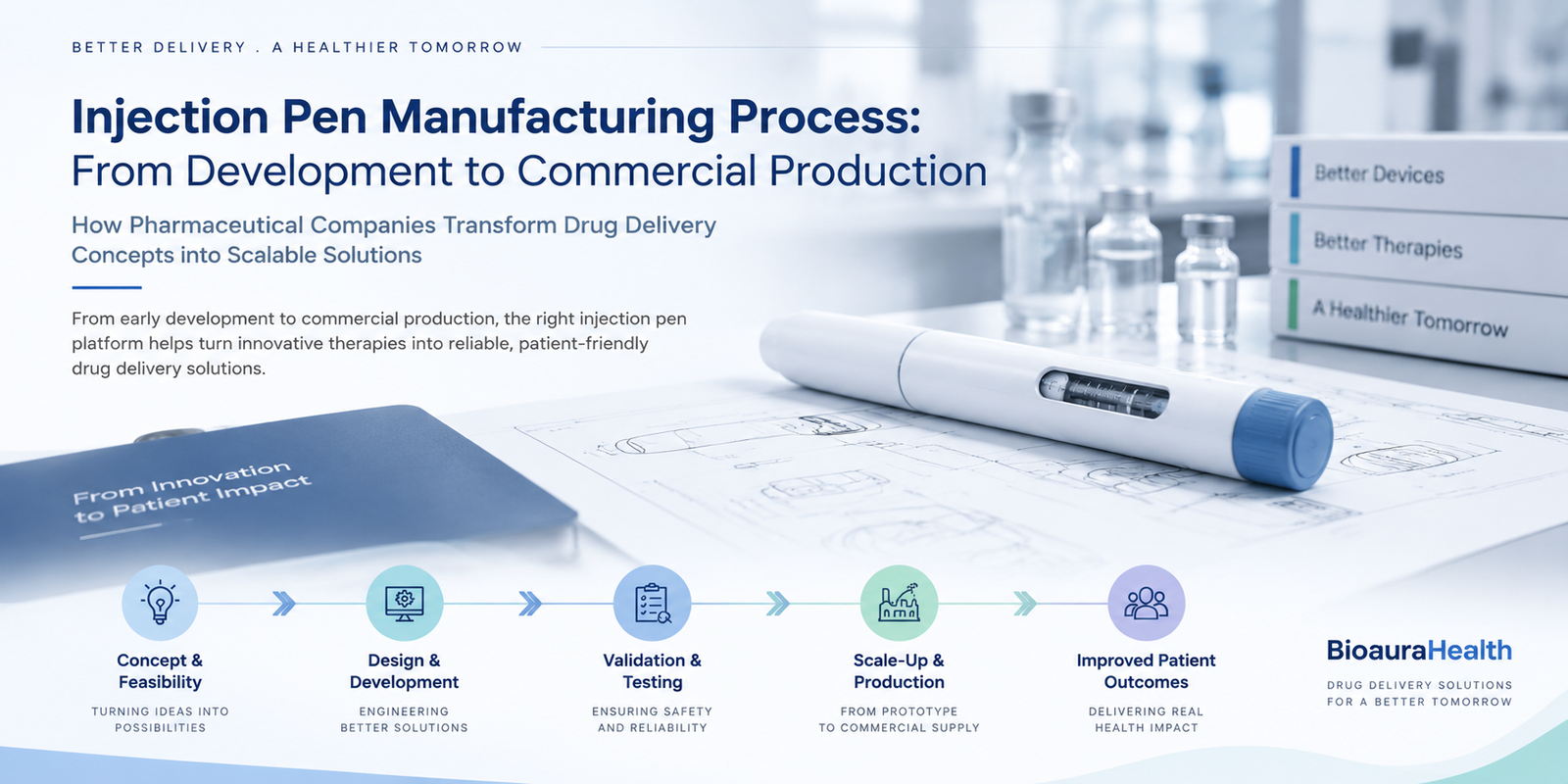
The development of an injection pen involves much more than designing a device that can deliver medication.
For pharmaceutical companies, a successful injection pen solution must achieve a balance between drug compatibility, device performance, regulatory requirements, and long-term commercial scalability.
From early-stage concept evaluation to final commercialization, each stage of the development process influences the reliability, usability, and market success of the final drug delivery system.
This article explains the key stages involved in the injection pen manufacturing process and how pharmaceutical teams can successfully transition from initial development to commercial production.
1. Injection Pen Development Starts with Drug-Device Compatibility
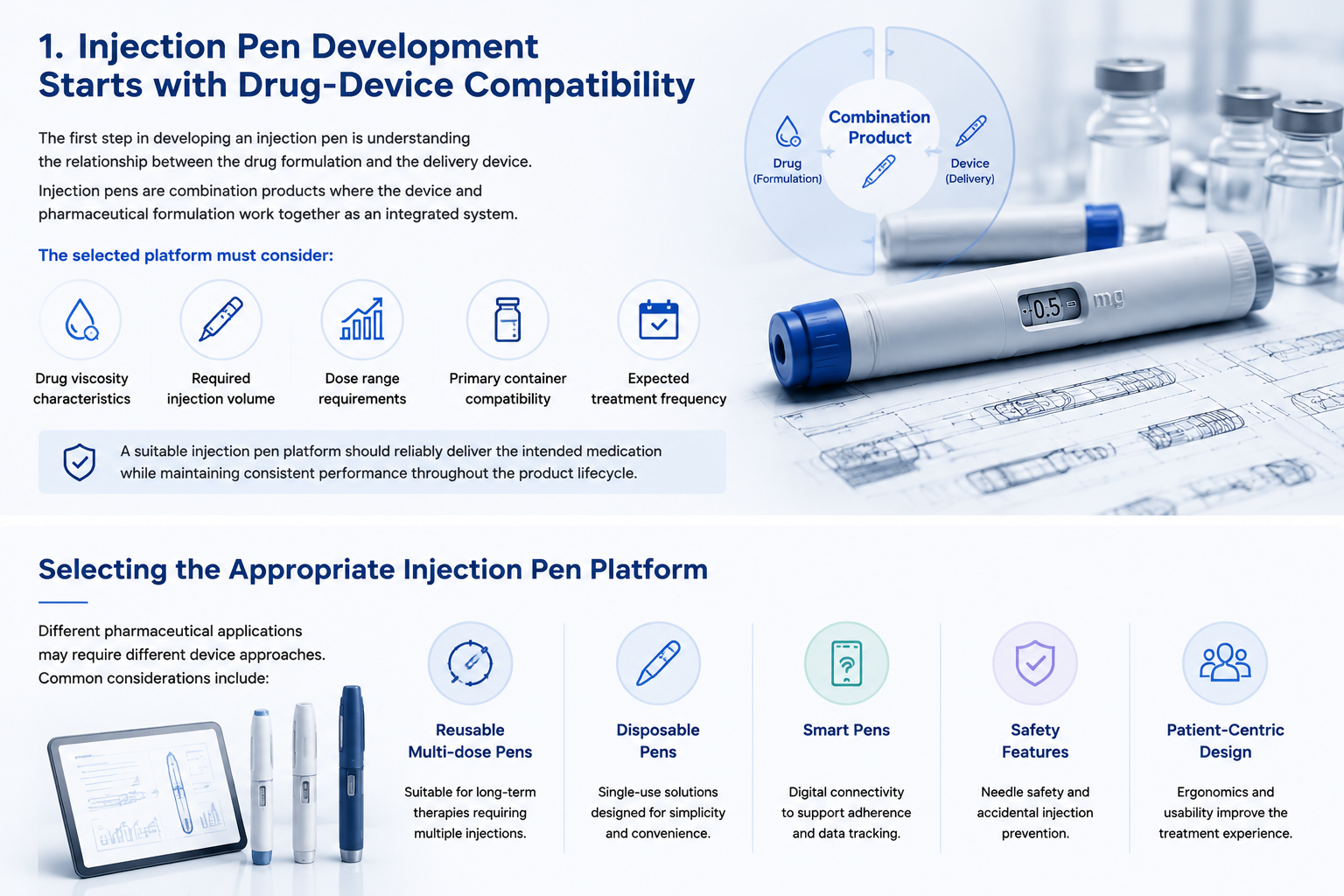
The first step in developing an injection pen is understanding the relationship between the drug formulation and the delivery device.
Unlike conventional medical devices, injection pens are typically part of a combination product where the device and pharmaceutical formulation work together as an integrated system.
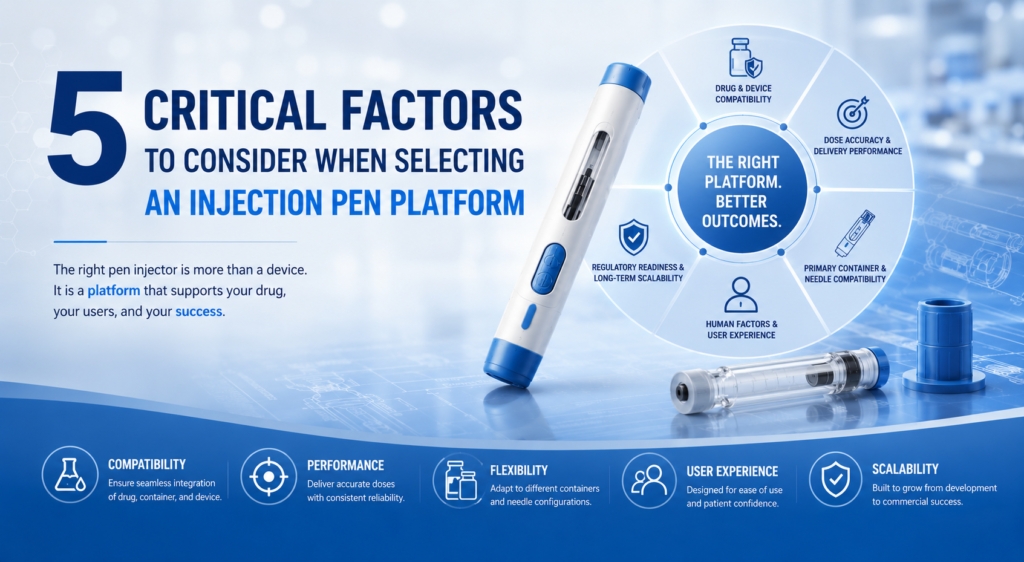
The selected platform must consider:
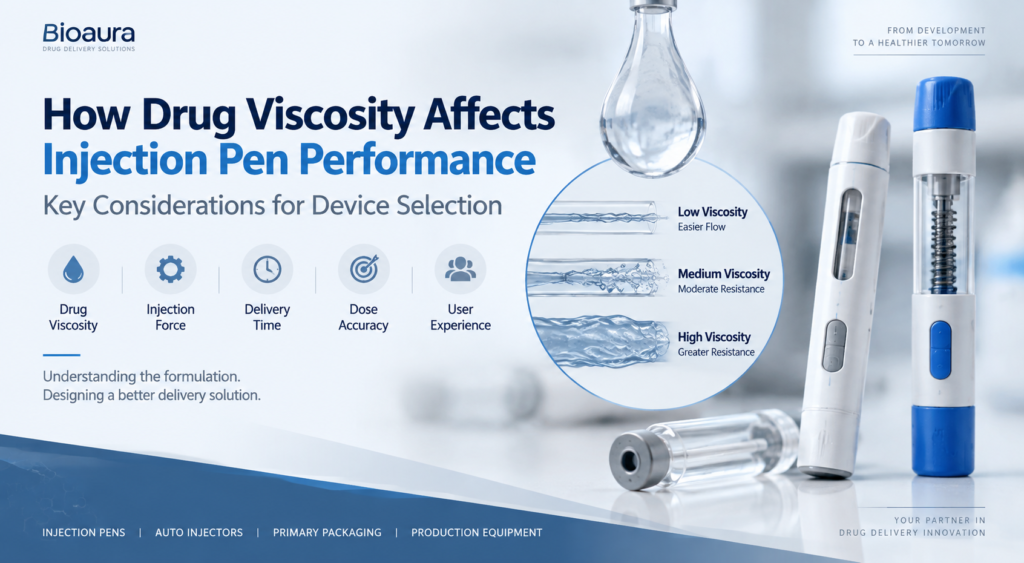
- Drug viscosity characteristics
- Required injection volume
- Dose range requirements
- Primary container compatibility
- Expected treatment frequency
A suitable injection pen platform should be evaluated based on whether it can reliably deliver the intended medication while maintaining consistent performance throughout the product lifecycle.
Selecting the Appropriate Injection Pen Platform
Different pharmaceutical applications may require different device approaches.
Common considerations include:
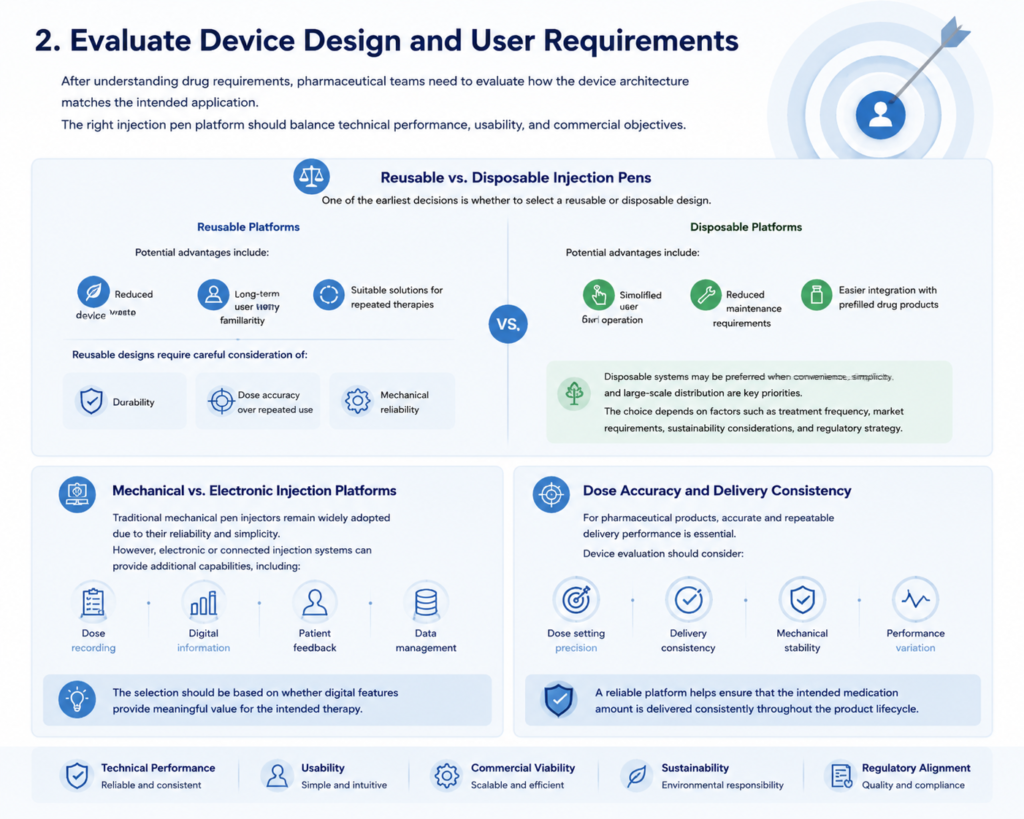
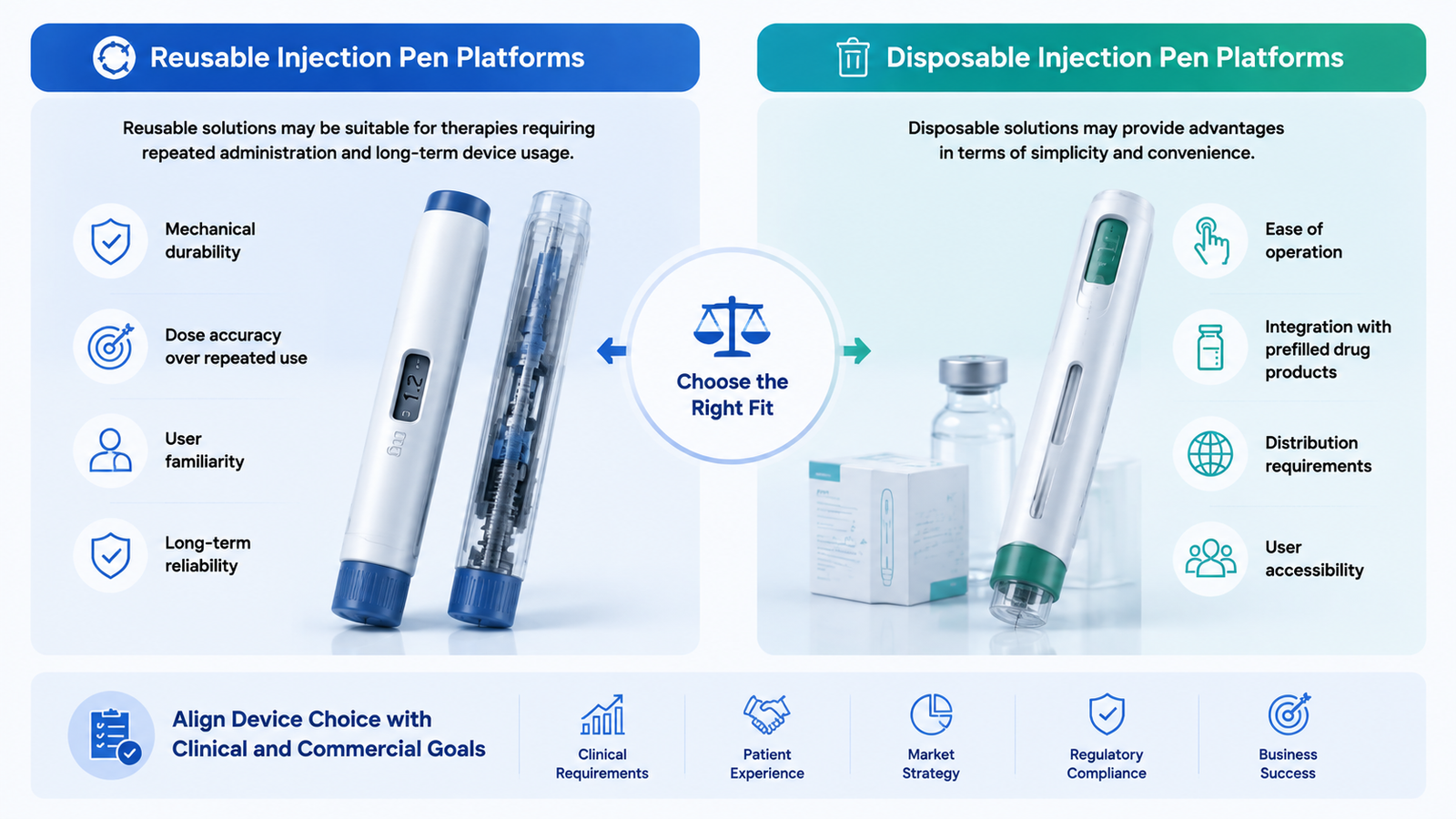
Reusable Injection Pen Platforms
Reusable solutions may be suitable for therapies requiring repeated administration and long-term device usage.
Important evaluation factors include:
- Mechanical durability
- Dose accuracy over repeated use
- User familiarity
- Long-term reliability
Disposable Injection Pen Platforms
Disposable solutions may provide advantages in terms of simplicity and convenience.
Important considerations include:
- Ease of operation
- Integration with prefilled drug products
- Distribution requirements
- User accessibility
The choice between different injection pen configurations should align with both clinical requirements and commercialization strategies.
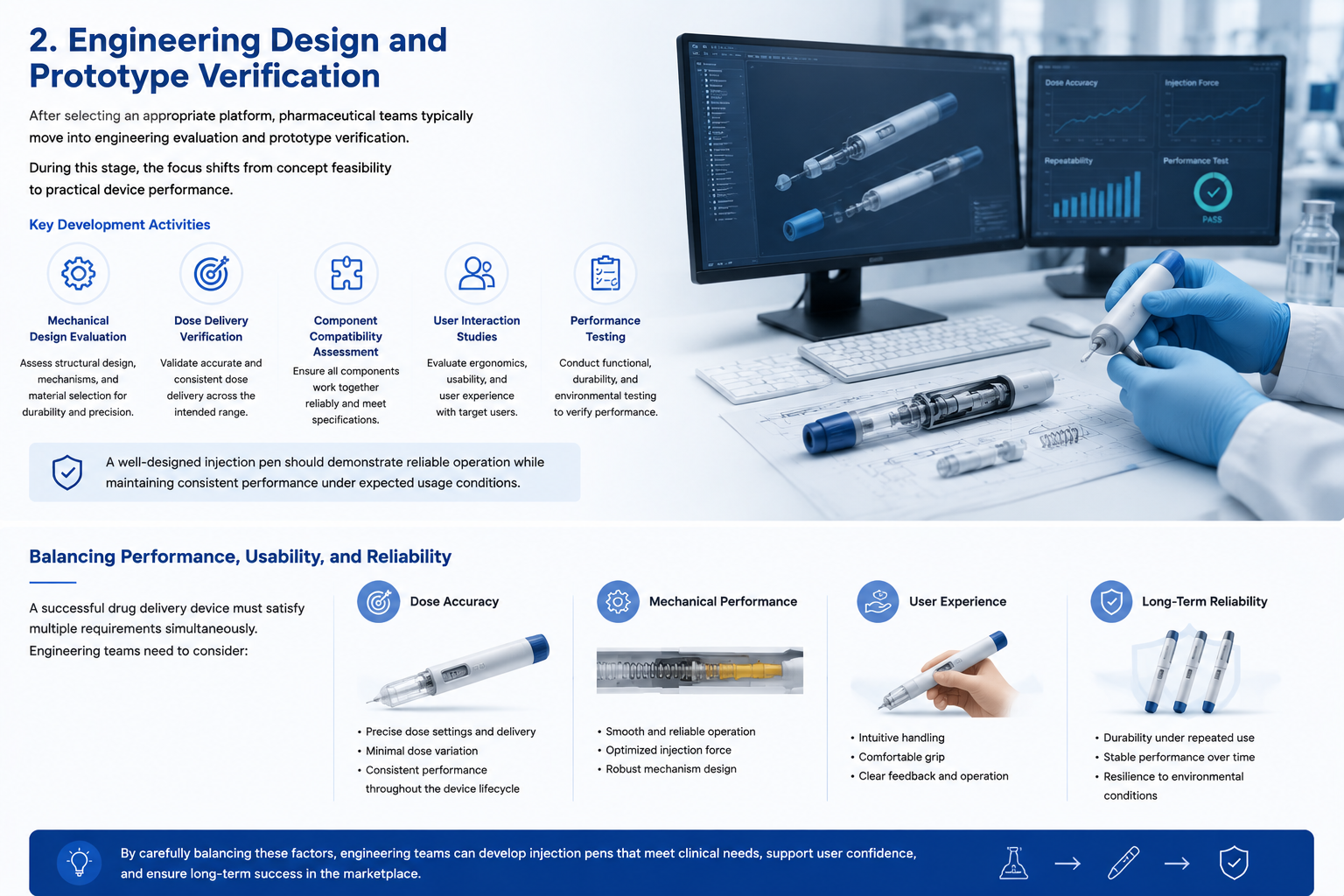
2. Engineering Design and Prototype Verification
After selecting an appropriate platform, pharmaceutical teams typically move into engineering evaluation and prototype verification.
During this stage, the focus shifts from concept feasibility to practical device performance.
Key development activities may include:
- Mechanical design evaluation
- Dose delivery verification
- Component compatibility assessment
- User interaction studies
- Performance testing
A well-designed injection pen should demonstrate reliable operation while maintaining consistent performance under expected usage conditions.
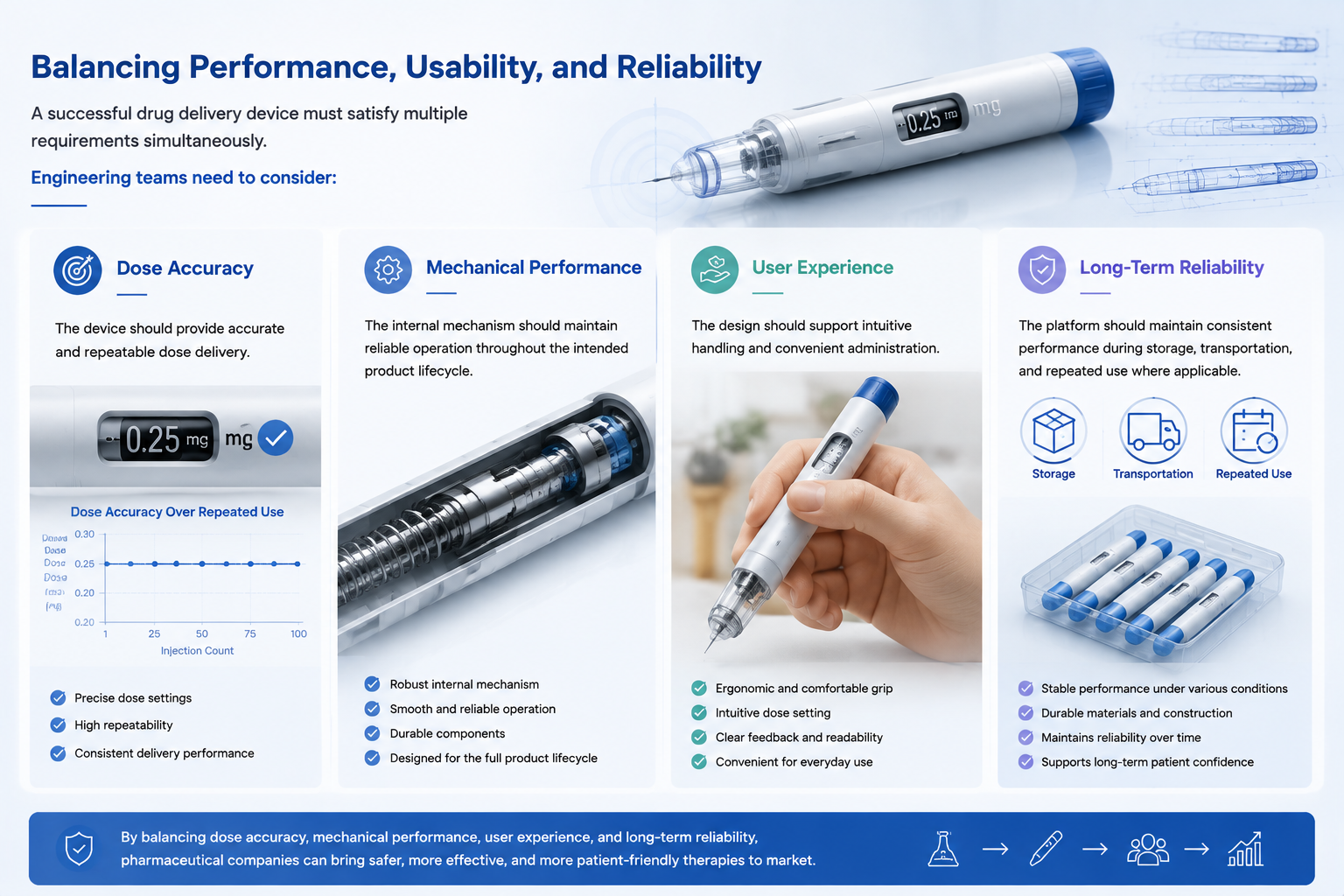
Balancing Performance, Usability, and Reliability
A successful drug delivery device must satisfy multiple requirements simultaneously.
Dose Accuracy
The device should provide accurate and repeatable dose delivery throughout its intended usage period.
Mechanical Performance
The internal mechanism should maintain reliable operation while supporting consistent delivery performance.
User Experience
The design should support intuitive handling and convenient administration for intended users.
Long-Term Reliability
The platform should maintain consistent performance during storage, transportation, and repeated use where applicable.
3. Transitioning from Prototype Development to Commercial Production
A major challenge in injection pen development is moving from a successful prototype to a scalable commercial solution.
A platform suitable for laboratory evaluation may require further optimization before large-scale production.
Important considerations include:
- Component consistency
- Assembly feasibility
- Process repeatability
- Quality control requirements
- Supply chain coordination
Early consideration of commercialization requirements helps pharmaceutical companies reduce potential risks during technology transfer and market introduction.
Designing for Manufacturing Scalability
An injection pen platform designed for commercial use should consider how technical decisions made during development affect future production performance.
A commercially viable solution should support:
- Stable component integration
- Consistent production performance
- Efficient quality inspection
- Reliable supply management
Design choices made during early development can significantly influence production efficiency, product consistency, and long-term commercialization success.
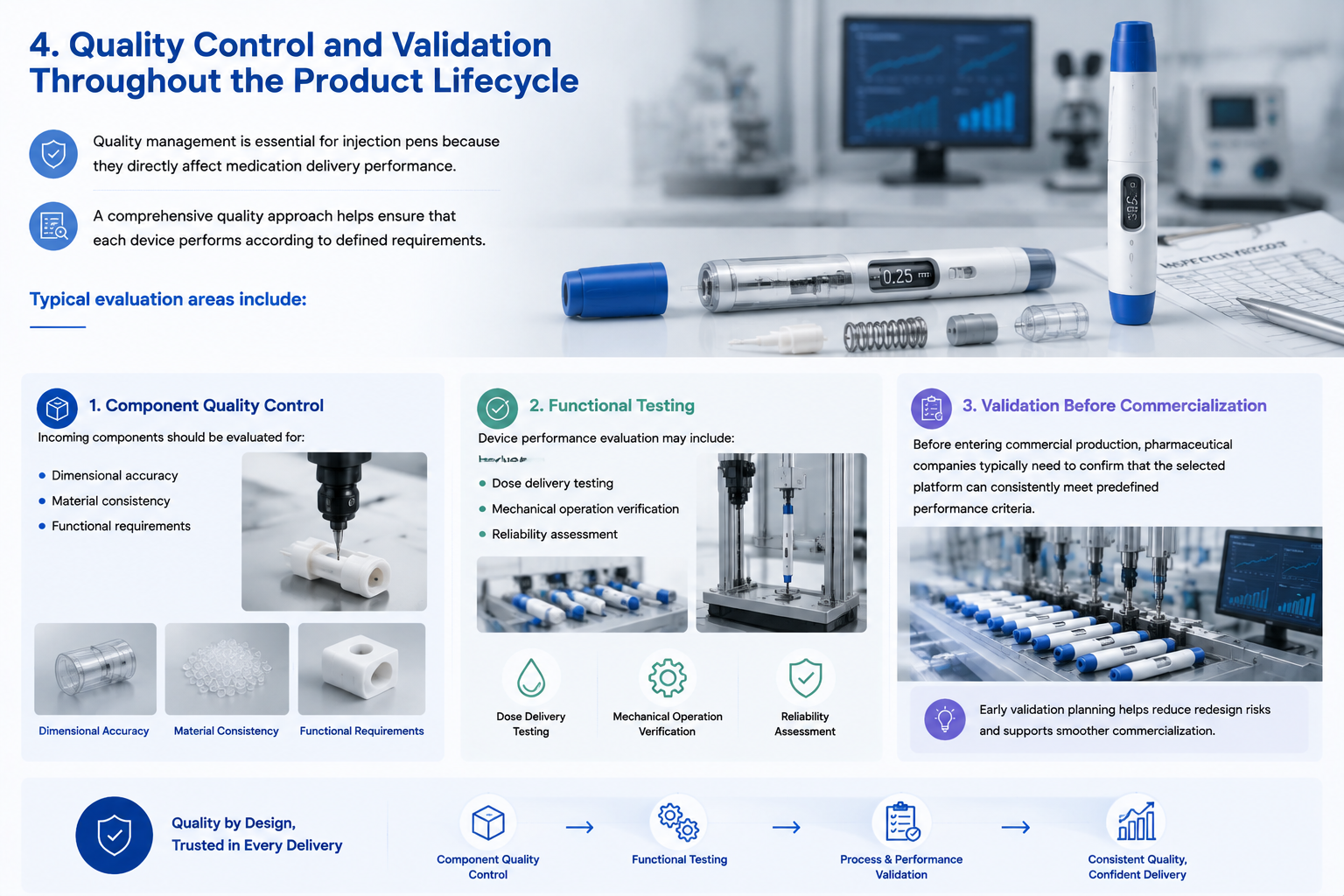
4. Quality Control and Validation Throughout the Product Lifecycle
Quality management is essential for injection pens because they directly influence medication delivery performance and user safety.
A comprehensive quality approach helps ensure that each device performs according to defined requirements throughout development and commercialization.
Component Quality Control
Incoming components should be evaluated to ensure consistency and compatibility with the overall device platform.
Typical evaluation areas include:
- Dimensional accuracy
- Material consistency
- Functional requirements
Functional Testing
Performance evaluation helps verify that the injection pen can deliver reliable and repeatable operation.
Testing considerations may include:
- Dose delivery testing
- Mechanical operation verification
- Reliability assessment
Validation Before Commercialization
Before entering commercial production, pharmaceutical companies need confidence that the selected platform can consistently meet predefined performance criteria.
Early validation planning helps reduce redesign risks and supports a smoother transition from development activities to commercial availability.
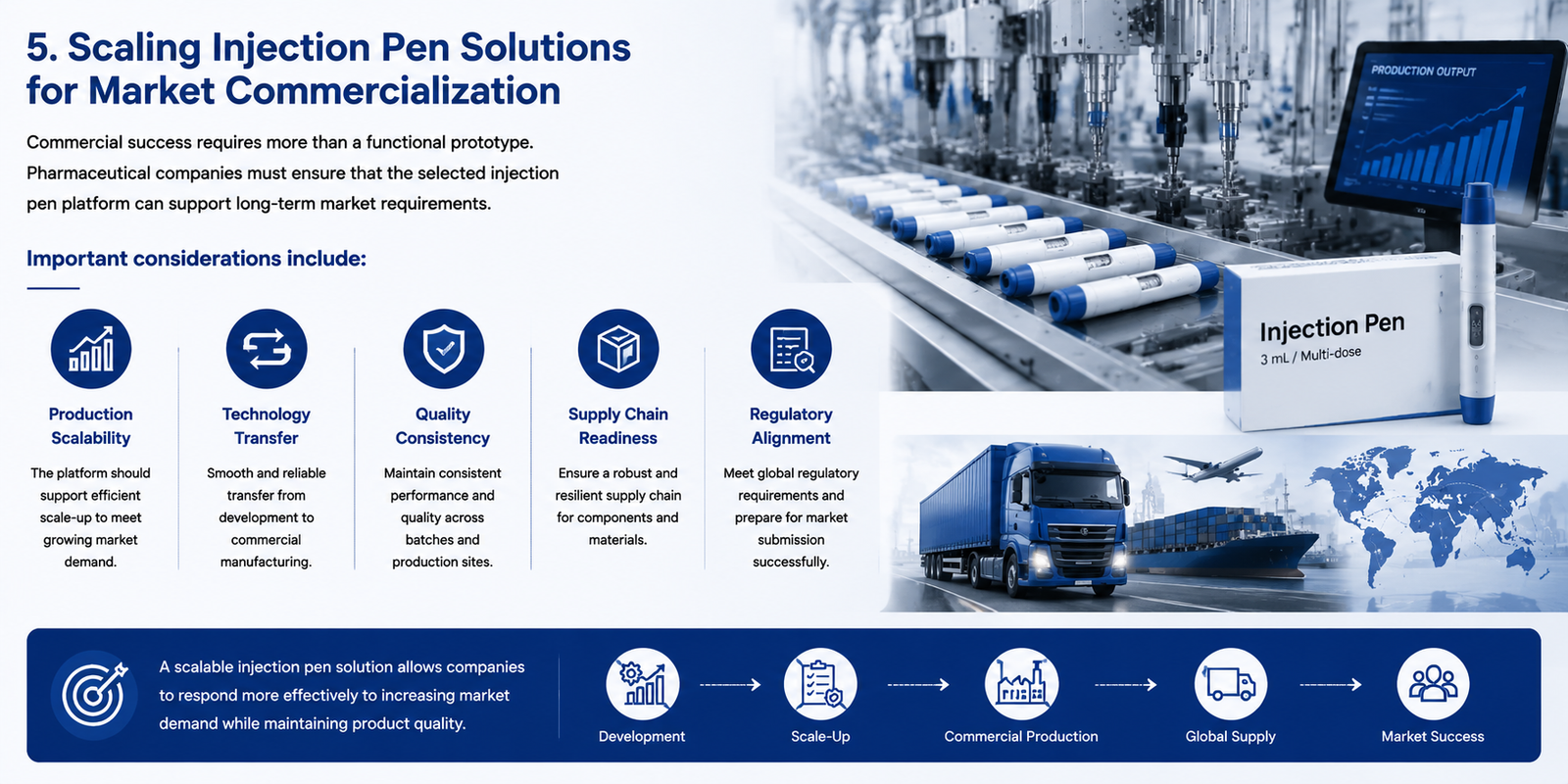
5. Scaling Injection Pen Solutions for Market Commercialization
Commercial success requires more than a functional prototype.
Pharmaceutical companies must ensure that the selected injection pen platform can support long-term market requirements while maintaining reliable performance.
Important considerations include:
- Production scalability
- Technology transfer
- Quality consistency
- Supply chain readiness
- Regulatory alignment
A scalable injection pen solution allows companies to respond more effectively to increasing market demand while maintaining product quality and operational stability.
From Development Concept to Commercial Solution
The transition from early-stage development to commercial availability requires coordination between pharmaceutical teams, device specialists, quality teams, and supply chain partners.
A well-planned development pathway can help reduce complexity and improve efficiency throughout the product lifecycle.
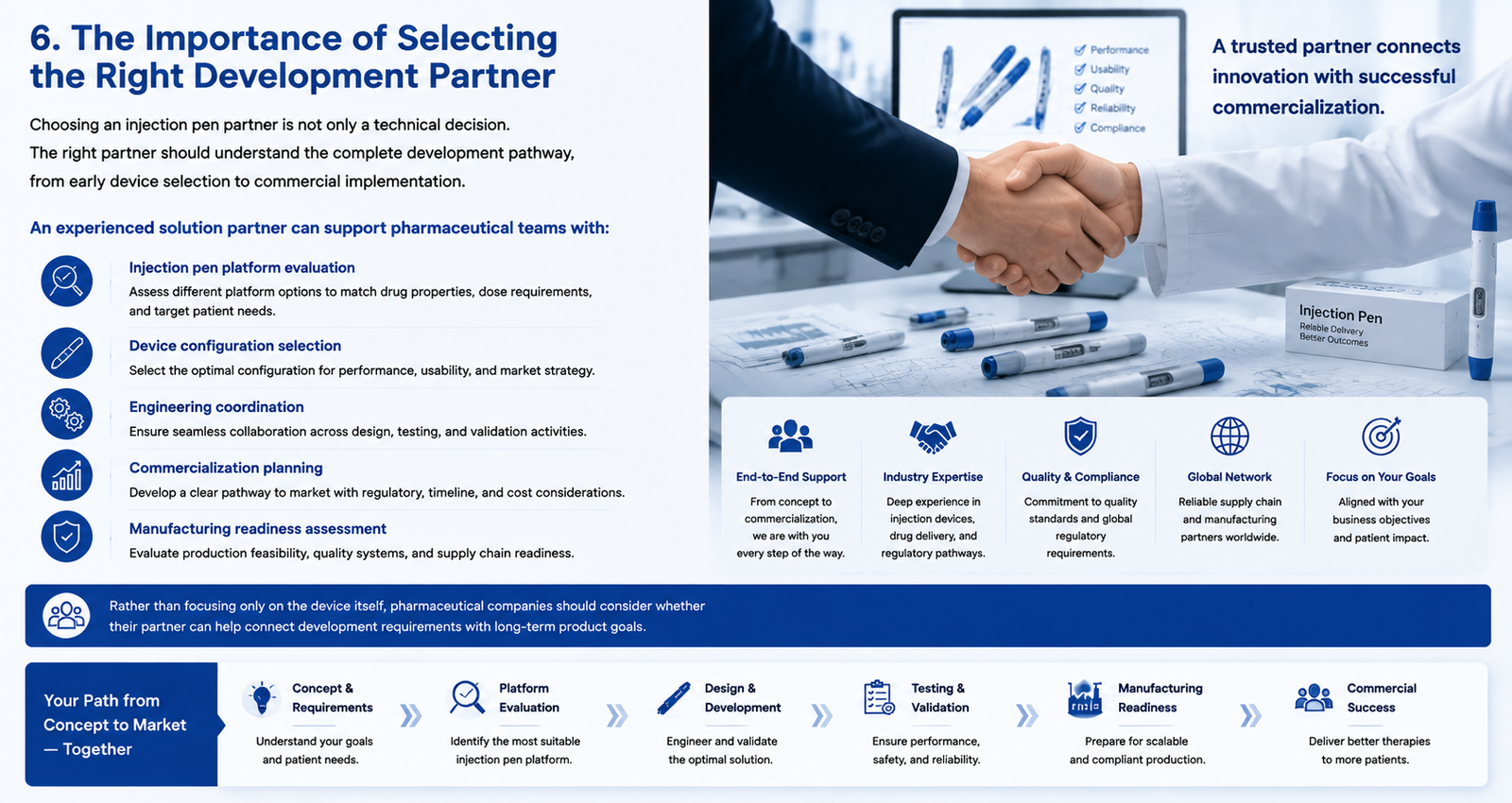
6. The Importance of Selecting the Right Development Partner
Choosing an injection pen partner is not only a technical decision. It is also a strategic decision that can influence development timelines, commercialization risks, and long-term product performance.
An experienced solution partner should understand the complete development pathway, from early platform evaluation to commercial implementation.
Support areas may include:
- Injection pen platform evaluation
- Device configuration selection
- Engineering coordination
- Commercialization planning
- Manufacturing readiness assessment
Rather than focusing only on the device itself, pharmaceutical companies should consider whether their partner can help connect development requirements with long-term product goals.
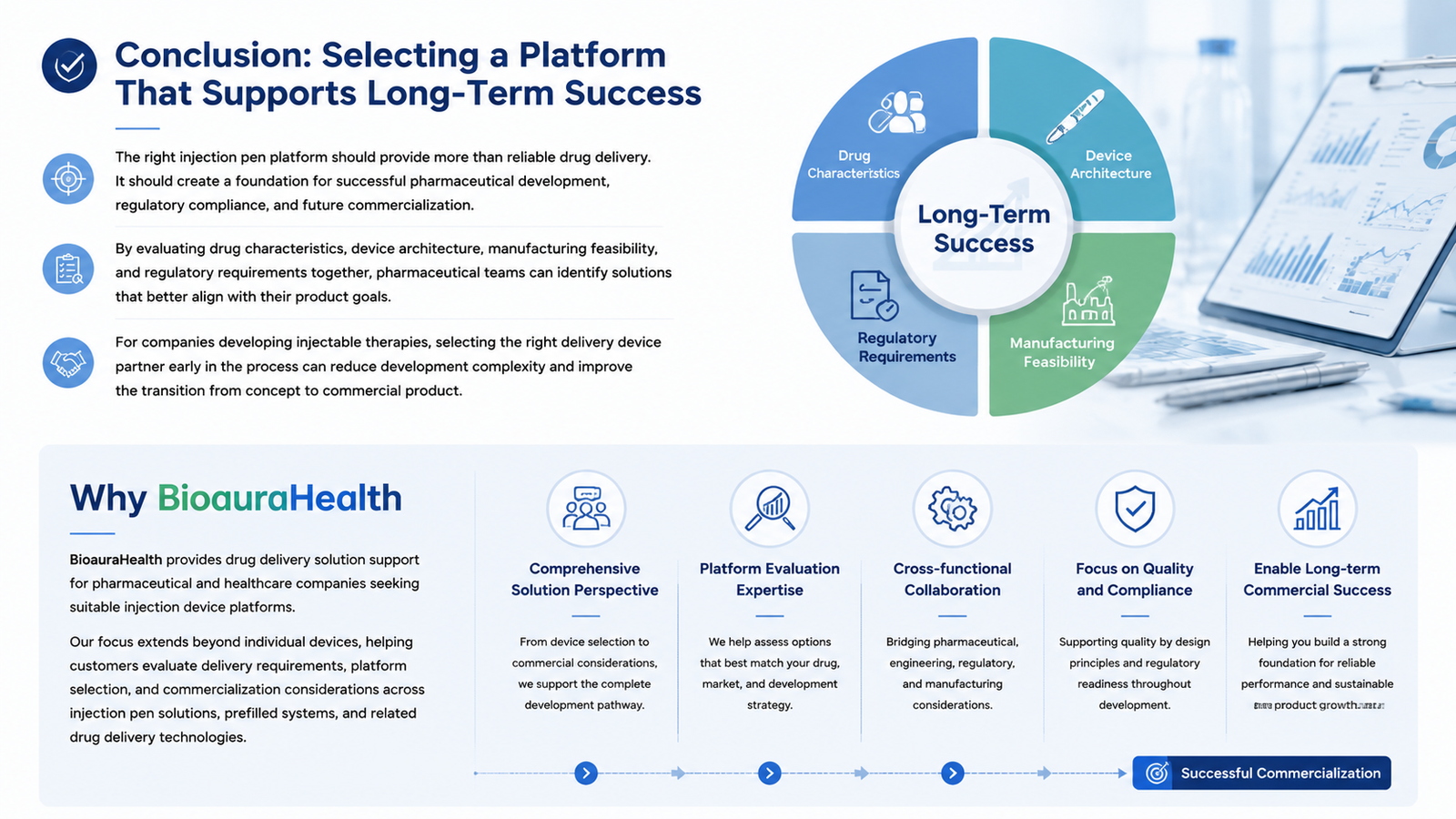
Conclusion: Building a Reliable Path from Concept to Commercial Production
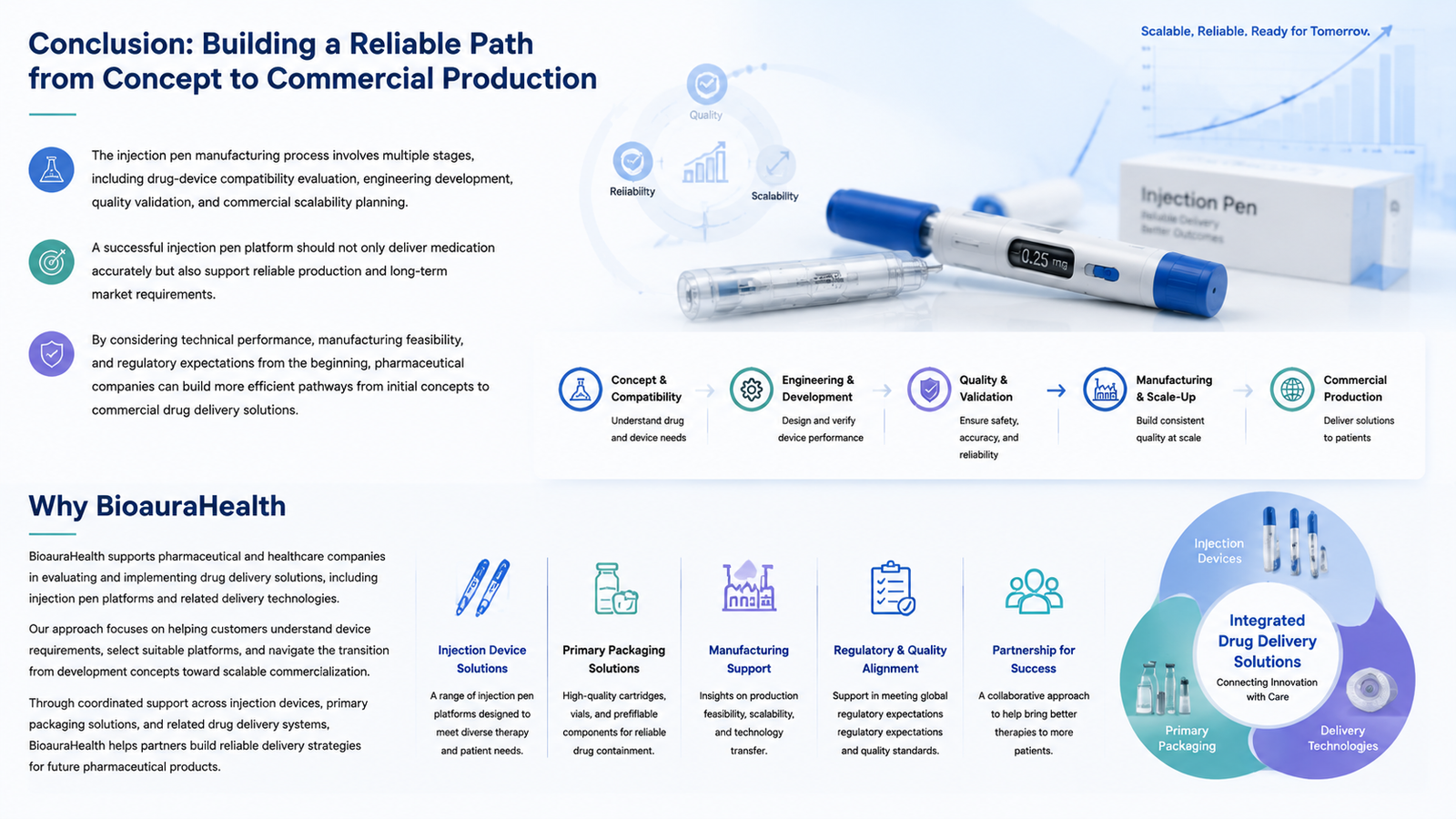
The injection pen manufacturing process involves multiple stages, including drug-device compatibility evaluation, engineering development, quality validation, and commercial scalability planning.
A successful injection pen platform should not only deliver medication accurately but also support reliable development, regulatory compliance, and long-term market requirements.
By considering technical performance, manufacturing feasibility, and regulatory expectations from the beginning, pharmaceutical companies can build more efficient pathways from initial concepts to commercial drug delivery solutions.
Why BioauraHealth
BioauraHealth supports pharmaceutical and healthcare companies in evaluating and implementing drug delivery solutions, including injection pen platforms and related delivery technologies.
Our approach focuses on helping customers understand device requirements, select suitable platforms, and navigate the transition from development concepts toward scalable commercialization.
Through coordinated support across injection devices, primary packaging solutions, and related drug delivery systems, BioauraHealth helps partners build reliable delivery strategies for future pharmaceutical products.