
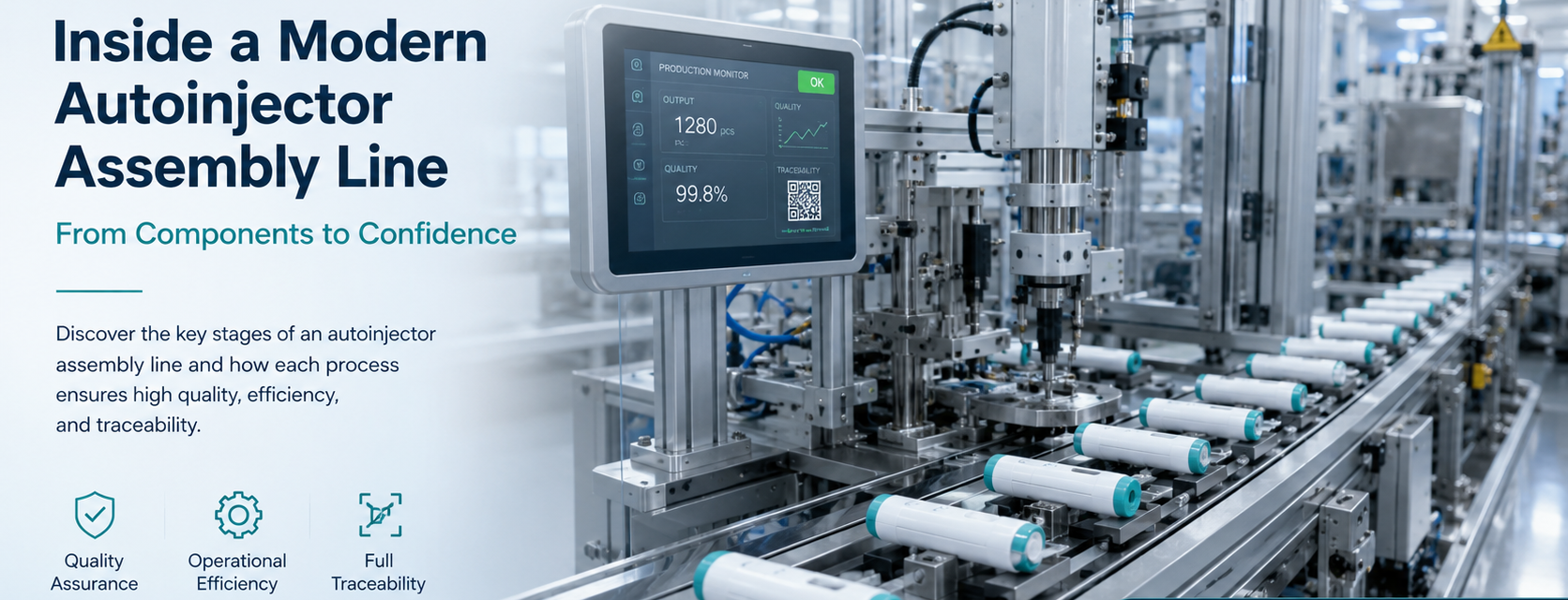
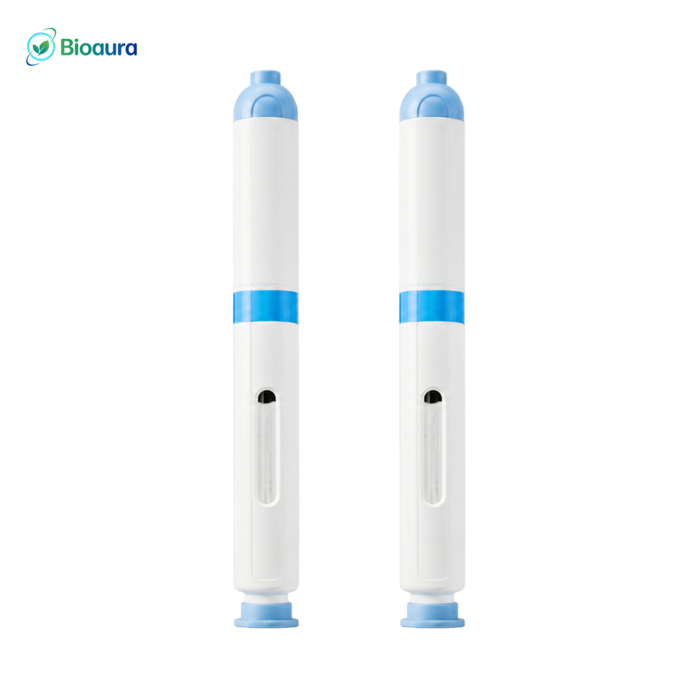
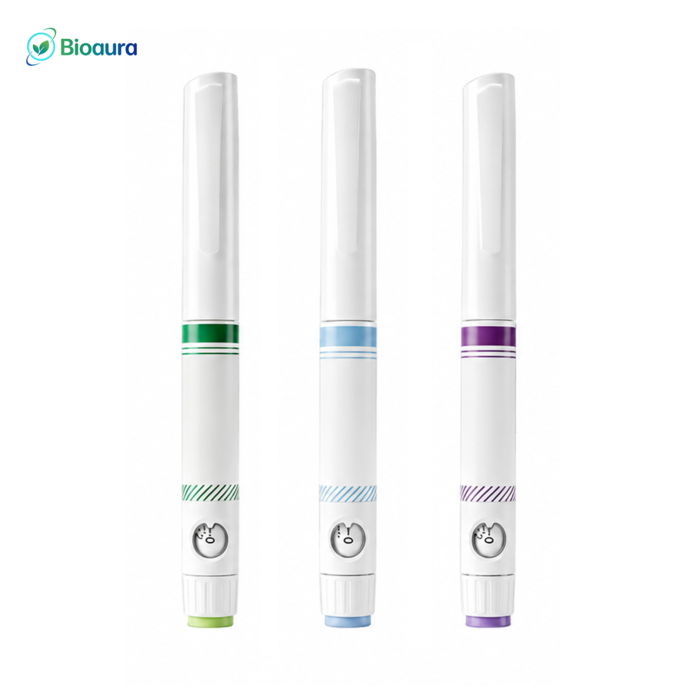
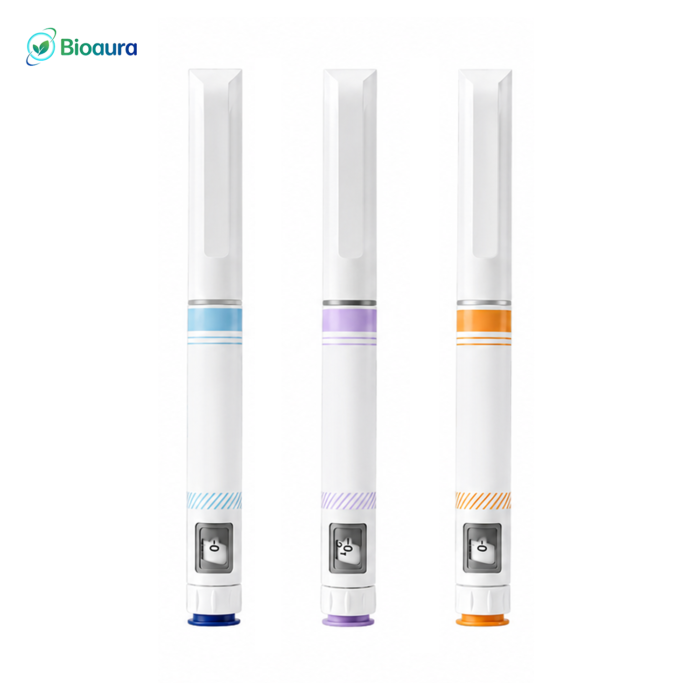
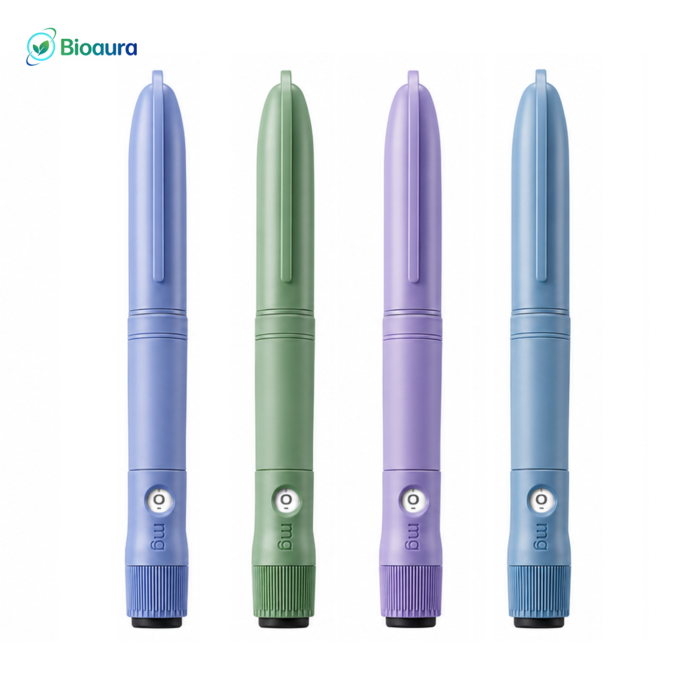
As the demand for self-injection devices continues to grow, manufacturers are increasingly investing in automated production solutions to improve quality, efficiency, and traceability. An autoinjector assembly line is a fully integrated manufacturing system that transforms individual components into finished, ready-to-package autoinjectors.This article explains the key stages of a modern autoinjector assembly line and how each process contributes to reliable device manufacturing.
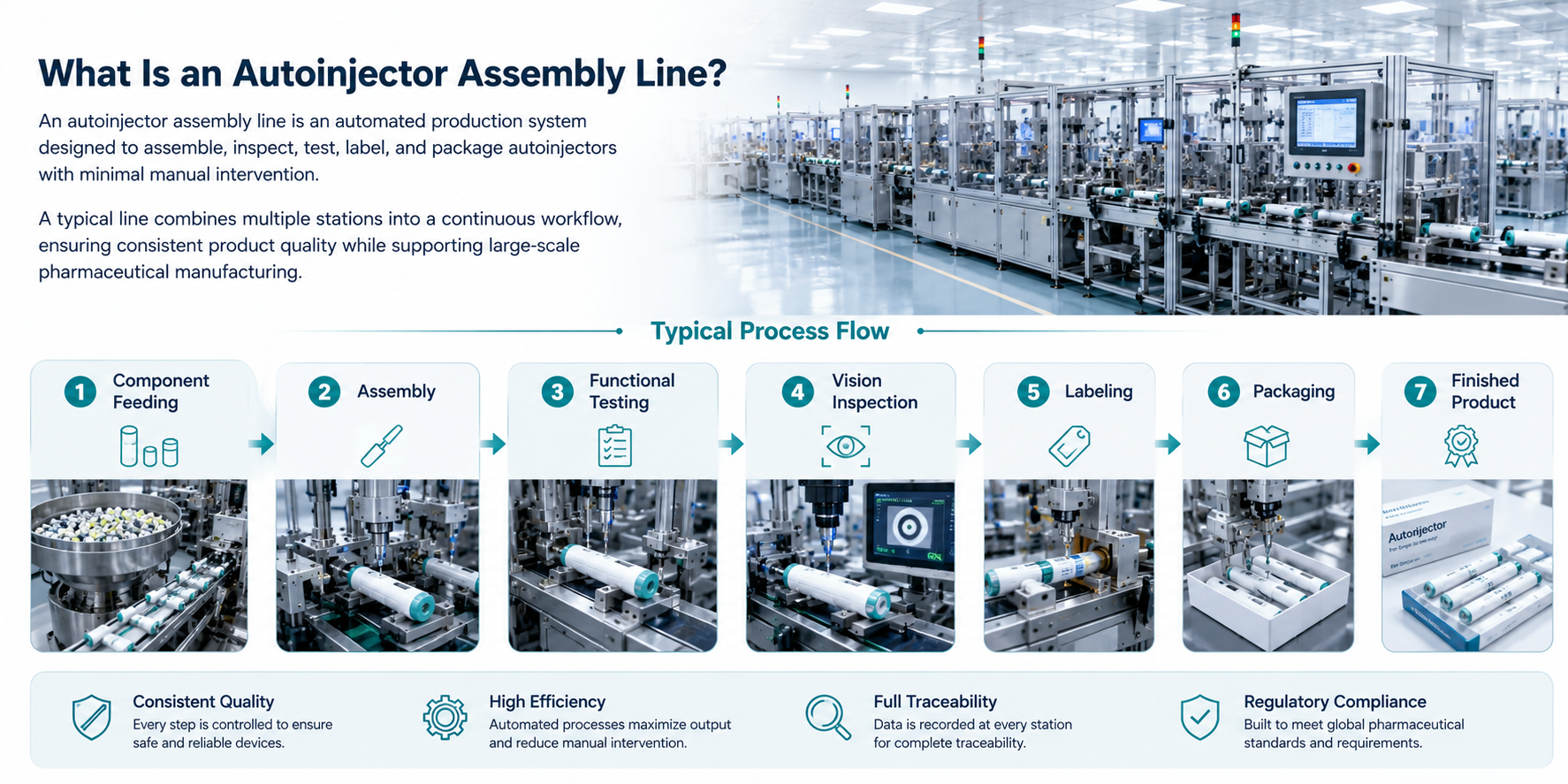
What Is an Autoinjector Assembly Line?
An autoinjector assembly line is an automated production system designed to assemble, inspect, test, label, and package autoinjectors with minimal manual intervention.A typical line combines multiple stations into a continuous workflow, ensuring consistent product quality while supporting large-scale pharmaceutical manufacturing.
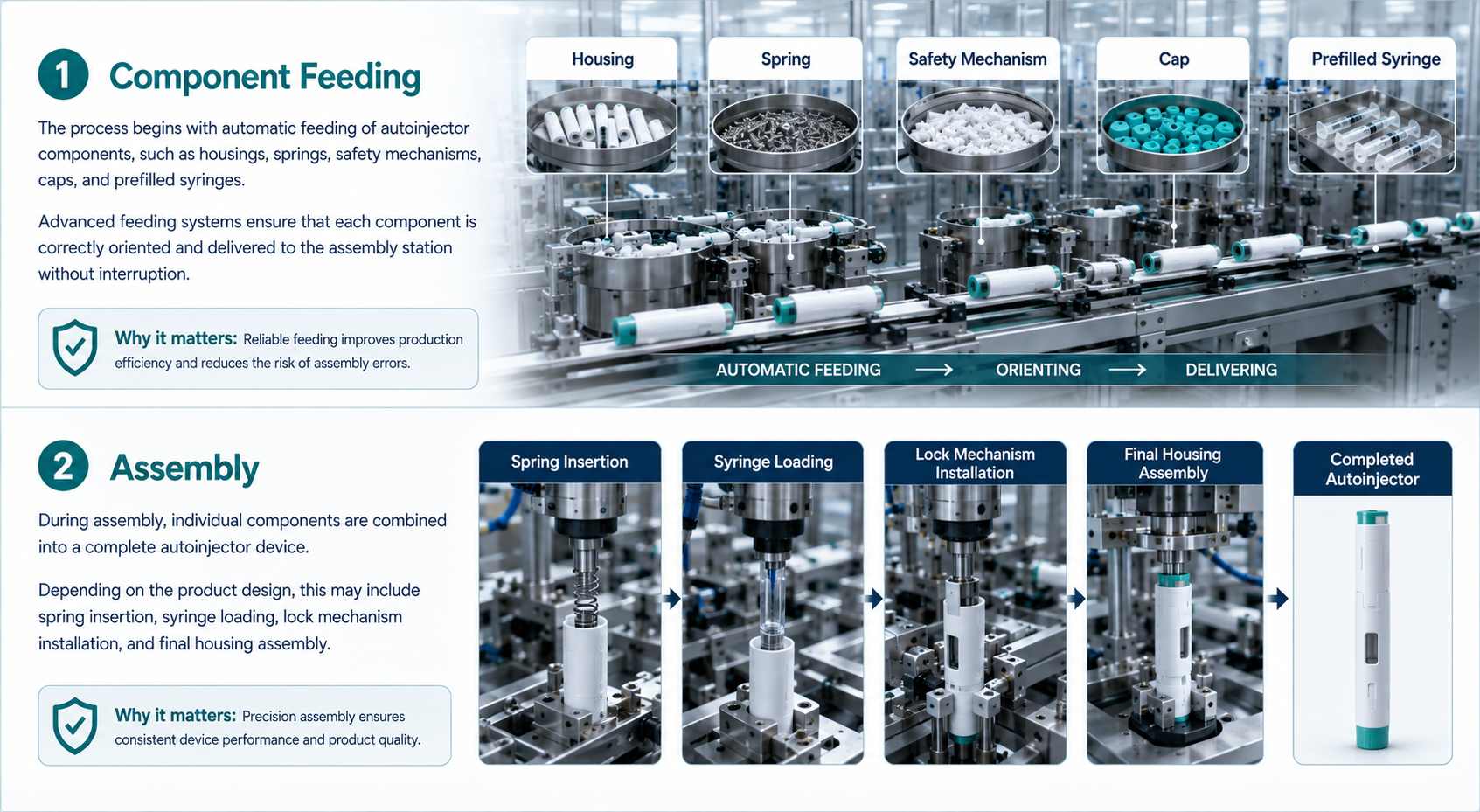
1. Component Feeding
The process begins with automatic feeding of autoinjector components, such as housings, springs, safety mechanisms, caps, and prefilled syringes.
Advanced feeding systems ensure that each component is correctly oriented and delivered to the assembly station without interruption.
Why it matters: Reliable feeding improves production efficiency and reduces the risk of assembly errors.
2. Assembly
During assembly, individual components are combined into a complete autoinjector device.
Depending on the product design, this may include spring insertion, syringe loading, lock mechanism installation, and final housing assembly.
Why it matters: Precision assembly ensures consistent device performance and product quality.
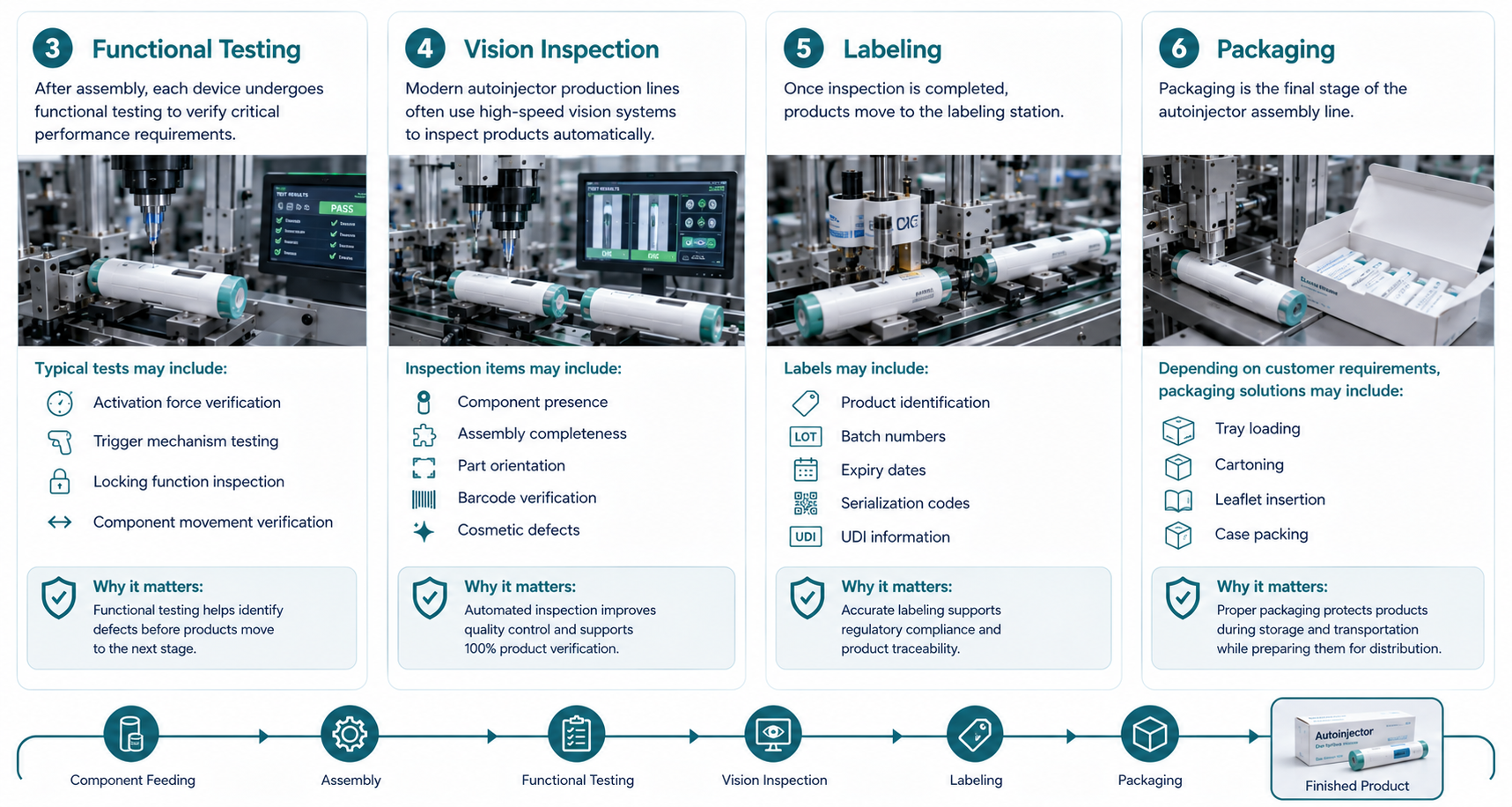
3. Functional Testing
After assembly, each device undergoes functional testing to verify critical performance requirements.
Typical tests may include:
· Activation force verification
· Trigger mechanism testing
· Locking function inspection
· Component movement verification
Why it matters: Functional testing helps identify defects before products move to the next stage.
4. Vision Inspection
Modern autoinjector production lines often use high-speed vision systems to inspect products automatically.
Inspection items may include:
· Component presence
· Assembly completeness
· Part orientation
· Barcode verification
· Cosmetic defects
Why it matters: Automated inspection improves quality control and supports 100% product verification.
5. Labeling
Once inspection is completed, products move to the labeling station.
Labels may include:
· Product identification
· Batch numbers
· Expiry dates· Serialization codes
· UDI information
Why it matters: Accurate labeling supports regulatory compliance and product traceability.
6. Packaging
Packaging is the final stage of the autoinjector assembly line.
Depending on customer requirements, packaging solutions may include tray loading, cartoning, leaflet insertion, and case packing.
Why it matters: Proper packaging protects products during storage and transportation while preparing them for distribution.
Conclusion
An autoinjector assembly line is much more than a collection of machines. It is a complete manufacturing solution that integrates component feeding, assembly, testing, inspection, labeling, and packaging into a streamlined process.
By combining automation, quality control, and traceability, modern autoinjector production lines help pharmaceutical and medical device manufacturers achieve reliable, scalable, and compliant manufacturing.
Comment (1)
Great content! Keep up the good work!