How Drug Viscosity Affects Injection Pen Performance: Key Considerations for Device Selection
The development of modern injectable therapies is driving new challenges in drug delivery device design.
As pharmaceutical companies move toward higher-concentration formulations, biologics, peptides, and GLP-1 therapies, drug viscosity has become an increasingly important factor when selecting an injection pen platform.
A device that performs well with a low-viscosity formulation may not deliver the same performance with a more viscous drug.
Therefore, successful injection pen development requires a comprehensive understanding of the relationship between:
Drug formulation + Primary Container + Injection Device
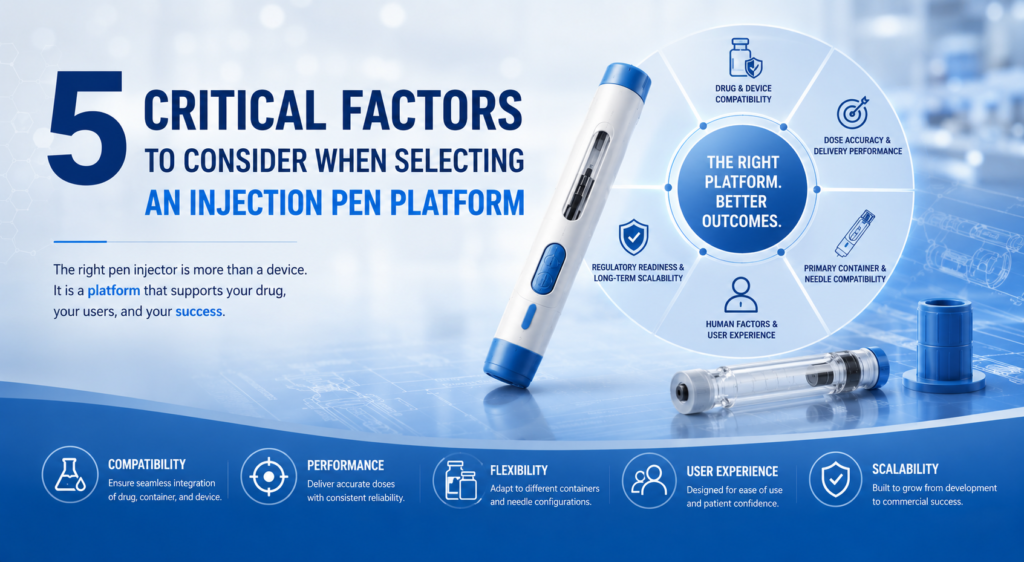
Before evaluating specific technical parameters, selecting the right injection pen platform is a critical first step in drug-device development. You can learn more about the key considerations in our article: 5 Critical Factors to Consider When Selecting an Injection Pen Platform .
1. Why Drug Viscosity Matters in Injection Pen Design
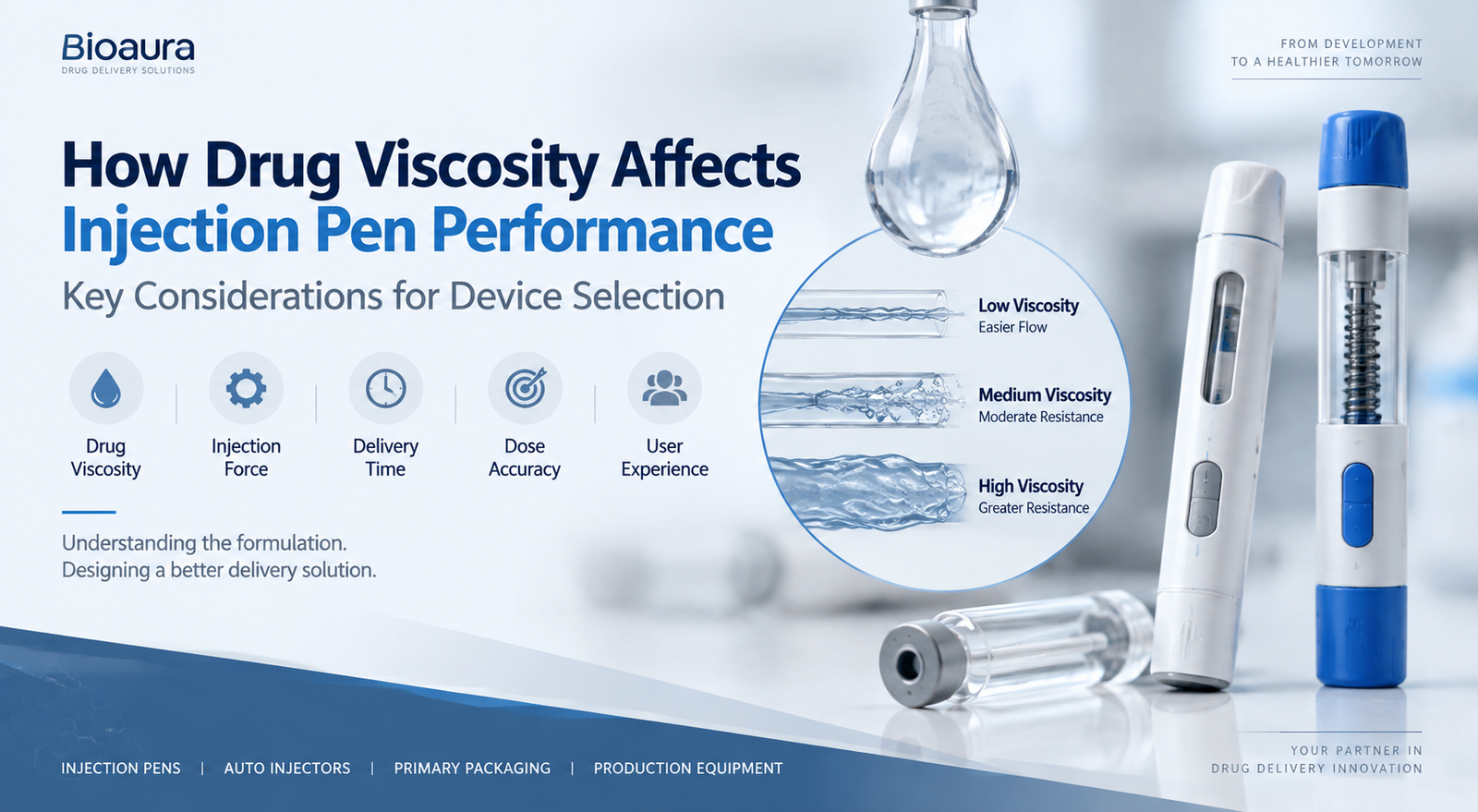
Drug viscosity directly influences how easily a formulation can flow through the delivery system.
Higher viscosity formulations typically create greater resistance during injection, which may affect:
- Injection force
- Delivery time
- Dose accuracy
- User experience
- Device mechanism requirements
For pharmaceutical companies developing self-injection therapies, viscosity should be considered during the early stages of device selection rather than after the device design has already been finalized.
A suitable pen injector or auto injector pen must be capable of delivering the intended formulation reliably throughout the product lifecycle.
2. The Relationship Between Viscosity and Injection Force
One of the most important considerations for high-viscosity drugs is injection force.
As viscosity increases, the device may require:
- Higher spring force
- Optimized drive mechanisms
- Improved mechanical efficiency
- Longer delivery time management
For example, an auto injection pen designed for a low-viscosity formulation may require additional evaluation when applied to a higher-viscosity biologic or peptide formulation.
The goal is not simply to increase mechanical force.
A well-designed injection device must balance:
- Reliable drug delivery
- Comfortable user experience
- Consistent dose performance
3. Drug-Device Compatibility Goes Beyond Physical Fit
A common misunderstanding is:
"If the cartridge fits, the device is compatible."
However, true compatibility involves multiple factors.
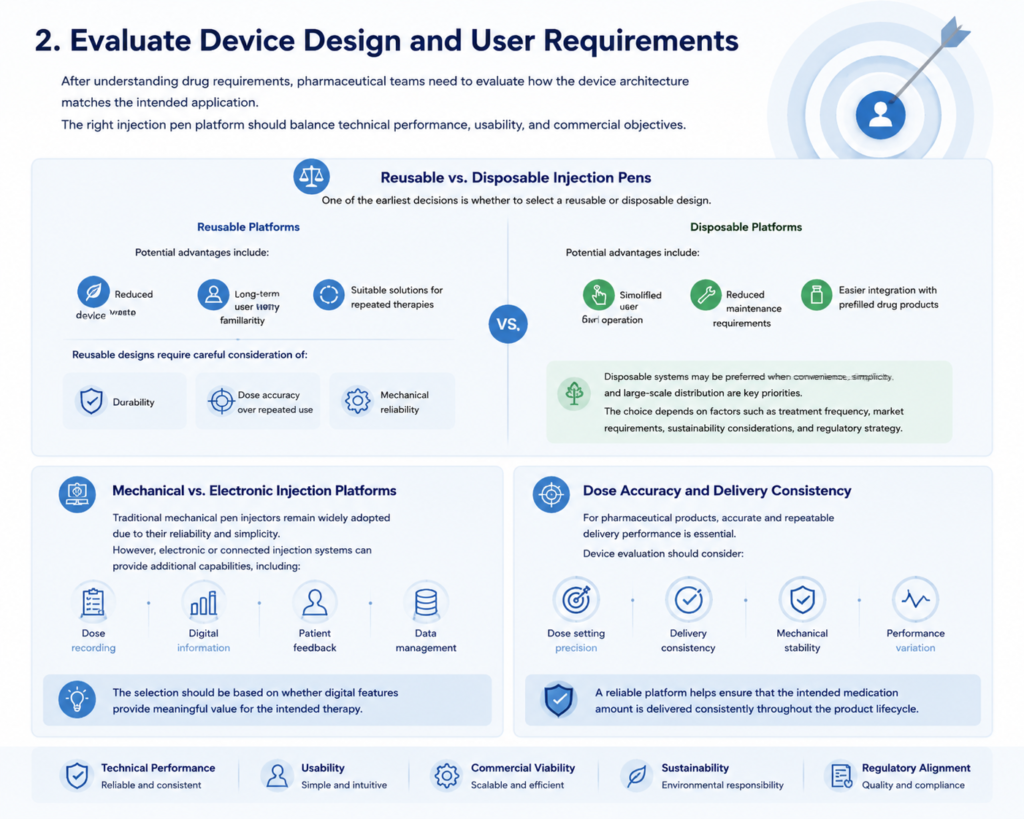
A complete drug-device evaluation should consider:
Drug Requirements
- Viscosity
- Concentration
- Injection volume
- Stability requirements
Device Performance
- Injection force
- Dose accuracy
- Delivery time
- Mechanical reliability
User Requirements
- Ease of operation
- Feedback signals
- Training requirements
This is especially important for self-administration products, where patients may use the device without healthcare professionals present.
4. Cartridge Selection and Injection System Integration
The primary container is another important factor in injection pen development.
Different cartridge configurations may influence:
- Available dose volume
- Plunger movement
- Device compatibility
- Overall injection performance
A successful injector pen platform should provide flexibility for different drug programs while maintaining reliable performance.
5. High-Viscosity Formulations and the Future of GLP-1 Delivery
The rapid growth of peptide-based therapies and GLP-1 products is increasing demand for advanced self-injection solutions.
Future injection devices must support:
- Higher concentration formulations
- Flexible dosing requirements
- Better patient experience
- Commercial scalability
This is why companies are increasingly evaluating not only individual devices, but complete delivery platforms.
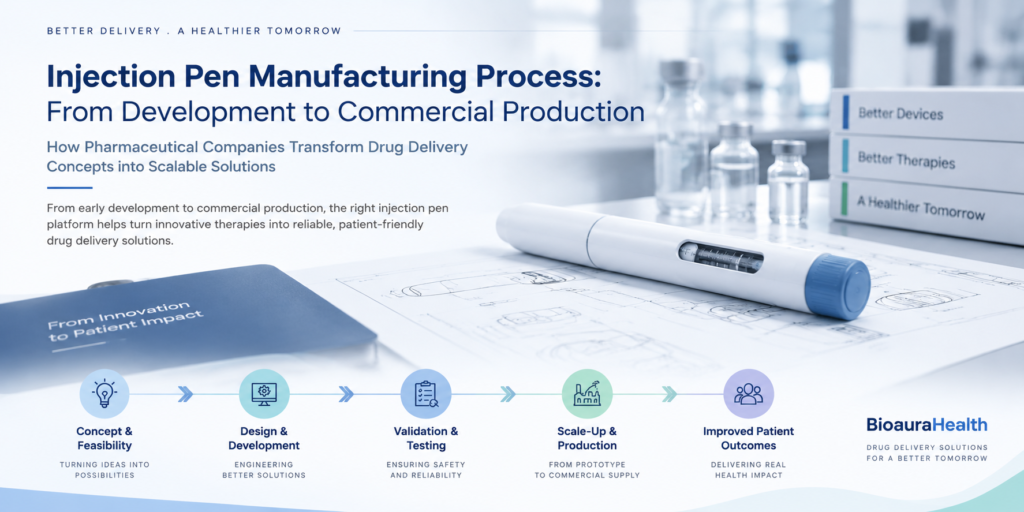
A modern autoinjector or pen injector platform should support the journey from early development to commercial production.
6. From Device Selection to Commercial Manufacturing
Device performance is only one part of successful commercialization.
A scalable platform should also consider:
- Design verification
- Regulatory requirements
- Manufacturing feasibility
- Assembly process compatibility
- Long-term supply stability
For commercial programs, the transition from development prototypes to scalable production requires careful planning.
This includes evaluating:
- Auto injector assembly requirements
- Pen injector assembly lines
- Quality control processes
Conclusion
Drug viscosity is not simply a formulation characteristic.
It is a critical factor that influences injection device selection, mechanical performance, user experience, and commercial success.
For pharmaceutical and biotech companies developing injectable therapies, choosing the right injection pen platform requires evaluating the complete drug delivery system — not only whether a device can deliver the drug, but whether it can support the product throughout its lifecycle.
The right platform does more than provide an injection mechanism.
It provides a reliable foundation from development to commercialization.