
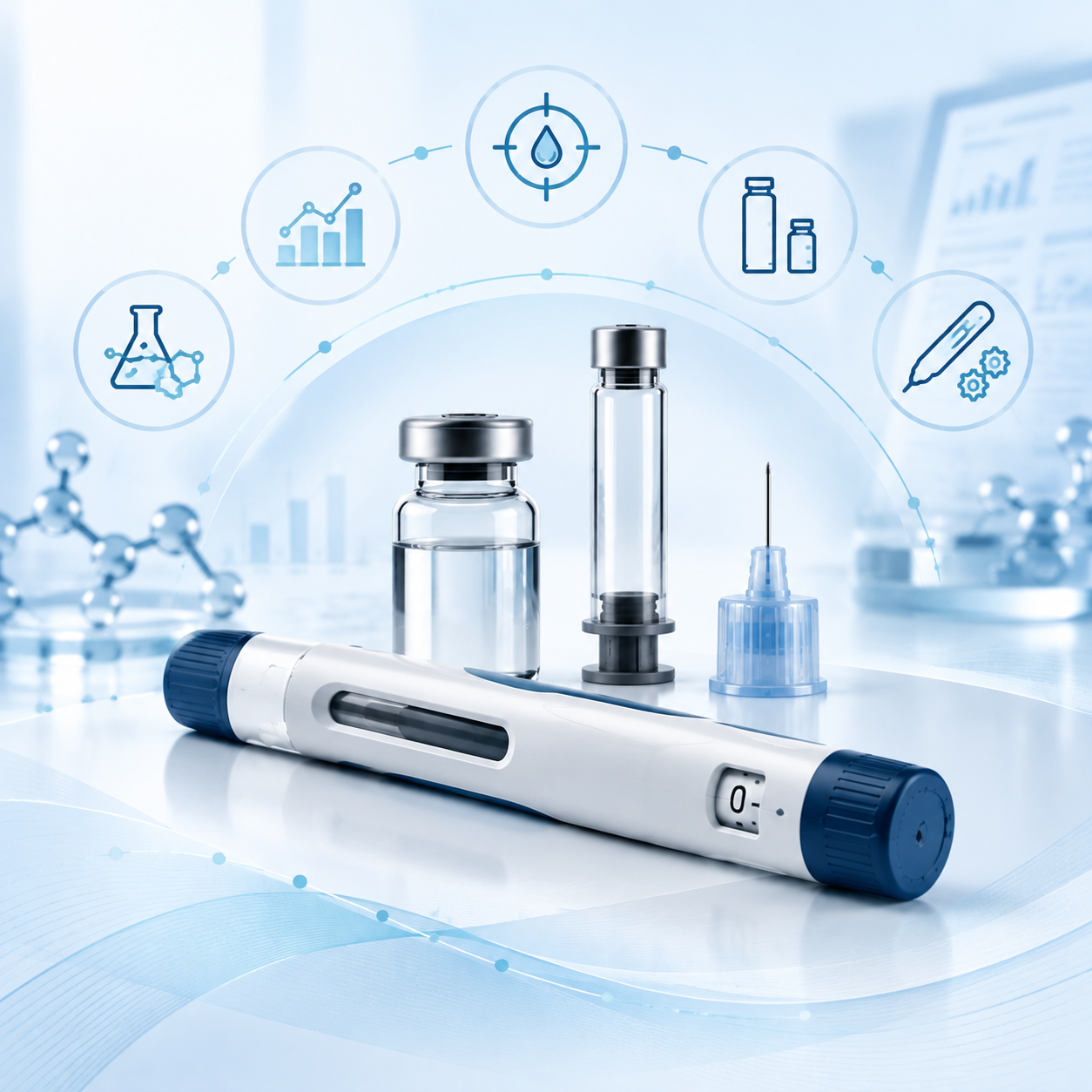
How to Choose the Right Pen Injector for Your Drug Delivery Project: Key Factors to Consider
Keywords: pen injector, injection pen, drug delivery device, injection device selection, cartridge pen injector, disposable pen injector, reusable pen injector
Introduction
The development of injectable therapies has continued to expand across pharmaceutical and biotechnology industries, driven by the growth of biologics, peptide therapies, hormone treatments, and chronic disease management solutions. As more injectable drugs move from clinical development toward commercialization, selecting an appropriate drug delivery device has become an increasingly important part of product strategy.
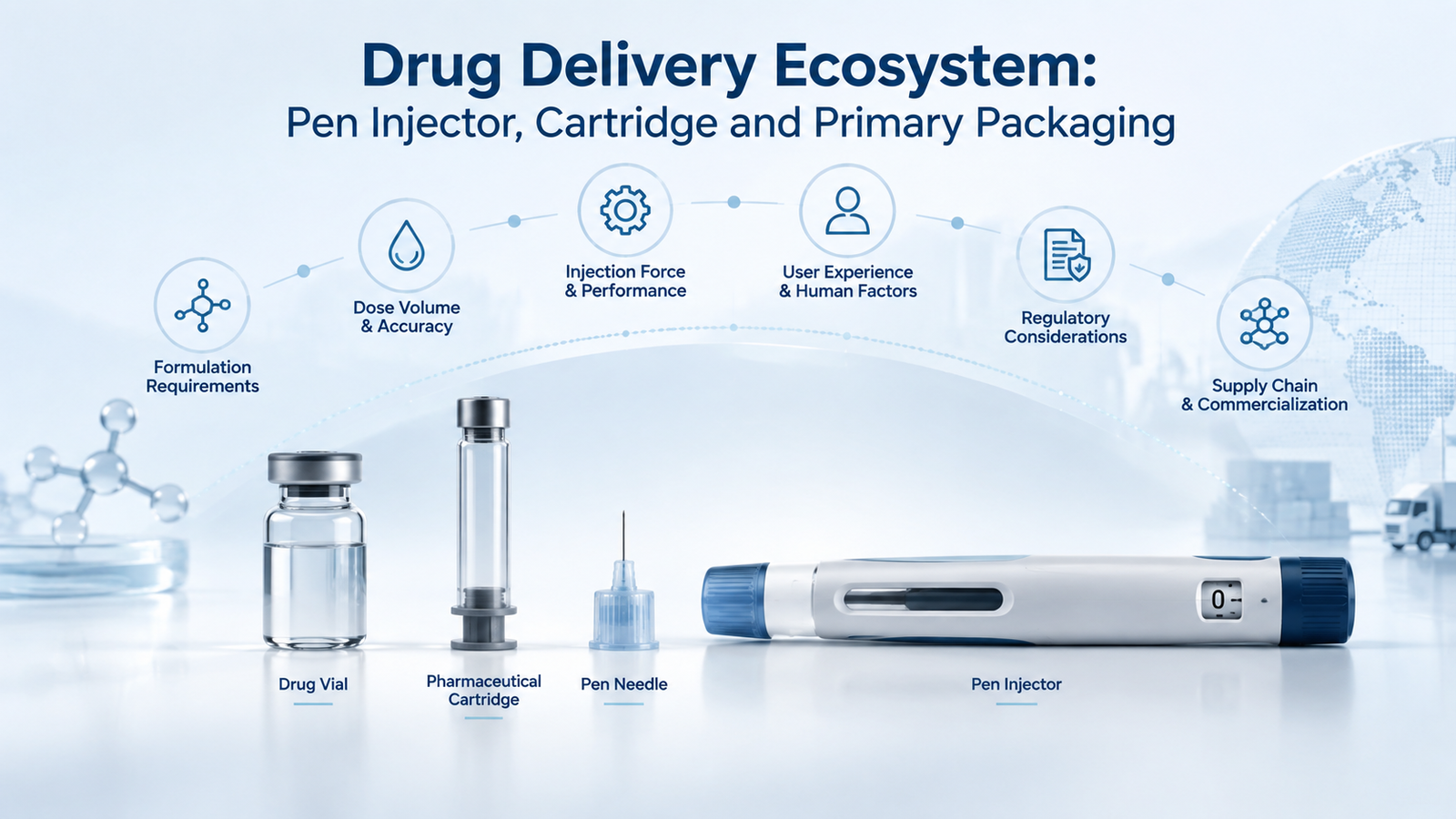
For many pharmaceutical companies, choosing a pen injector is not simply a matter of selecting a mechanical device. The injection system must work as part of a complete drug delivery ecosystem that includes the formulation, primary packaging, needle system, user requirements, and commercialization objectives.
An unsuitable injection device selection may create challenges throughout the development process. These challenges can include inconsistent injection performance, difficulties achieving the required dose accuracy, poor user experience, additional development activities, or delays during product preparation.
For example, a formulation with higher viscosity may require different injection force characteristics compared with a low-viscosity solution. Similarly, therapies requiring frequent self-administration may place greater emphasis on usability, feedback mechanisms, and patient confidence.
Therefore, selecting the right pen injector platform early in development can help reduce technical risks and improve product readiness.
This article discusses the key factors pharmaceutical companies, biotechnology companies, and drug delivery developers should evaluate when selecting an injection pen platform, including drug compatibility, cartridge selection, device mechanism, regulatory considerations, and long-term project requirements.
Why Pen Injector Selection Matters in Drug Development
Drug-device compatibility in combination products
A pen injector is not an independent component. It is part of a combination product where the drug formulation and delivery device must work together effectively.
One of the most important considerations during drug delivery device selection is compatibility between the formulation and the injection system.
Different injectable drugs may have different requirements depending on:
—— formulation viscosity
—— injection volume
—— required dosing frequency
—— injection force limitations
—— storage conditions
—— container compatibility
For example, a low-viscosity formulation may require different mechanical characteristics compared with a high-viscosity biologic formulation. The required injection force, delivery speed, and user experience may vary significantly depending on the formulation properties.
A device that performs well with one drug product may not necessarily provide the same performance with another formulation.
Therefore, device selection should be evaluated based on formulation characteristics and project requirements rather than selecting a device based only on appearance, availability, or unit price.
User experience and self-administration requirements
Many modern injectable therapies are designed for self-administration outside traditional clinical environments. As a result, user experience has become an important consideration in injection device development.
A well-designed injection pen should support:
—— intuitive operation
—— clear dose setting
—— reliable injection completion
—— user confidence during administration
Features such as audible feedback, tactile feedback, and visual indicators can help users understand the injection process and confirm successful delivery.
For chronic therapies, where patients may use injection devices regularly over extended periods, usability considerations can directly influence treatment experience and acceptance.
Human factors engineering should therefore be considered early rather than treated as a final-stage improvement.
Commercial and development considerations
Beyond technical performance, pharmaceutical companies also need to consider commercialization requirements.
Important factors may include:
—— production scalability
—— supply chain stability
—— customization requirements
—— regulatory documentation availability
—— long-term platform support
A drug delivery device selected during early development may become part of a commercial product strategy. Changing the device platform later in development can require additional evaluation, testing, and documentation.
Early consideration of device requirements allows development teams to better align technical feasibility with commercial objectives.
Key Factors to Consider When Selecting a Pen Injector Platform
3.1 Drug Compatibility and Injection Requirements
The first step in injection device selection is understanding the characteristics of the drug formulation.
Different formulations create different delivery requirements. Key factors include:
Formulation viscosity
Viscosity is one of the most important parameters affecting injection performance.
Low-viscosity formulations generally require less force for delivery, while high-viscosity formulations may require stronger driving mechanisms or optimized injection parameters.
For biologics, peptides, and other advanced therapies, formulation viscosity can vary depending on:
—— active ingredient concentration
—— excipients
—— formulation strategy
—— storage conditions
A suitable pen injector platform should be evaluated according to the actual formulation characteristics.
Dose volume requirements
The required injection volume directly affects device selection.
Some therapies require small-volume injections, while others may require larger delivery capacities.
Important considerations include:
—— maximum dose volume
—— dose increment requirements
—— cartridge capacity
—— injection duration
For example, a therapy requiring frequent dose adjustment may need a different dose-setting mechanism compared with a fixed-dose application.
Injection force and delivery performance
Injection force is another critical factor.
The relationship between formulation viscosity, needle characteristics, and device mechanism determines the overall delivery performance.
During development, teams should evaluate:
—— required injection force
—— injection speed
—— delivery consistency
—— patient usability
Device selection should be based on engineering evaluation rather than assuming one injection mechanism can meet every application.
3.2 Cartridge Compatibility and Primary Container Selection
A pen injector should always be evaluated together with its primary packaging system.
The drug delivery system typically involves multiple components:
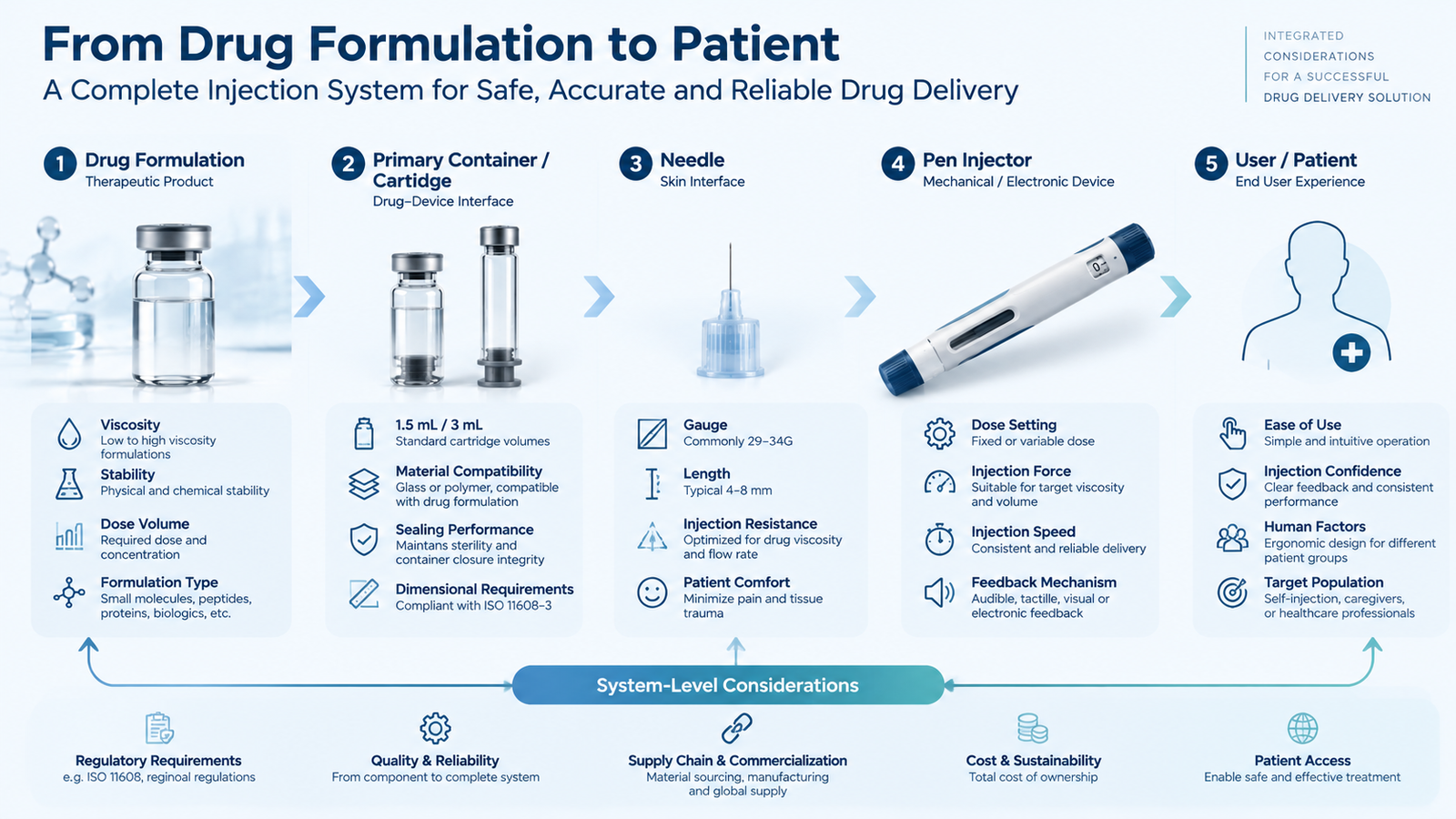
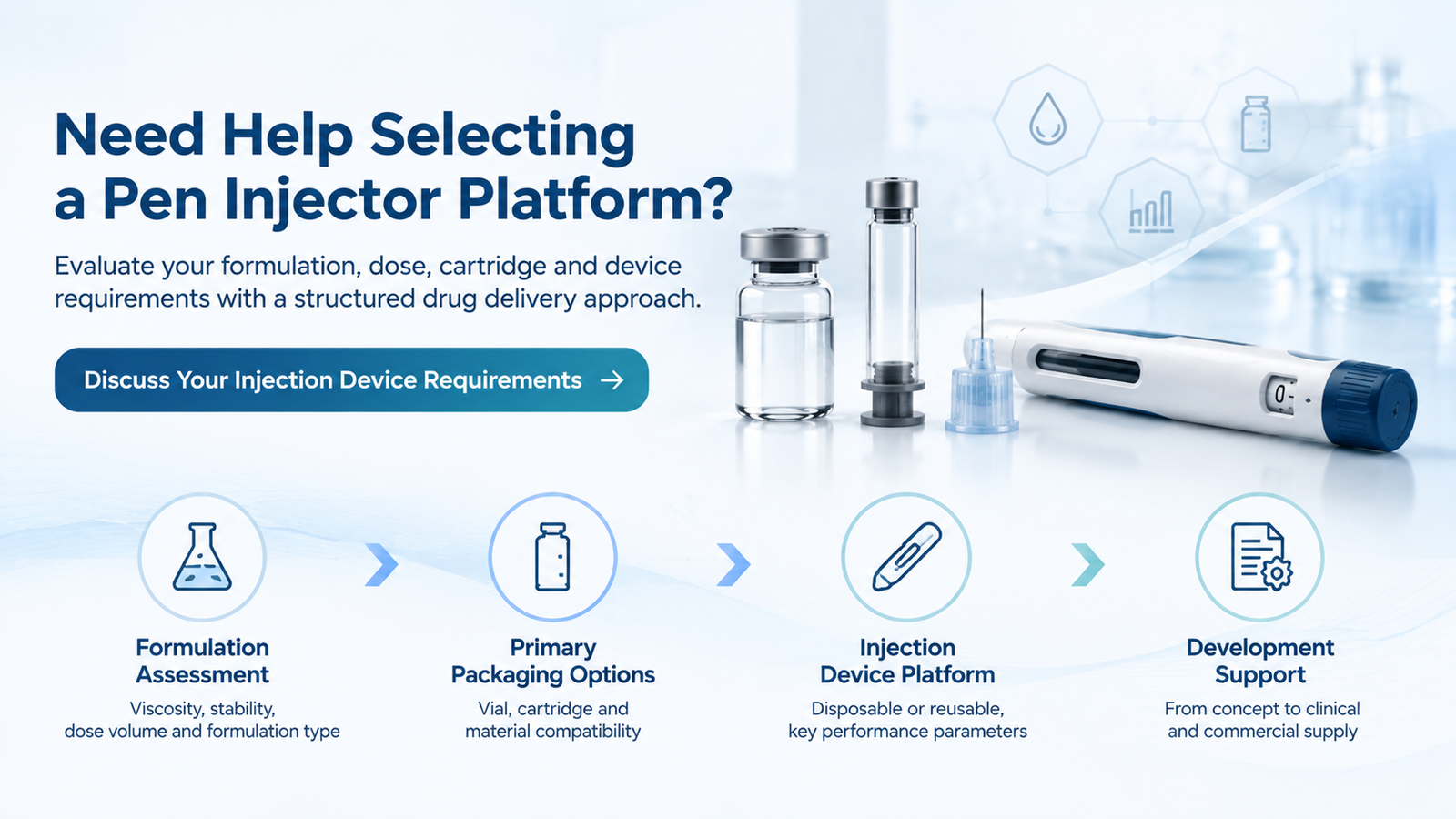
Drug formulation → Cartridge → Needle → Pen Injector
Each component affects overall performance.
Cartridge compatibility is particularly important because the primary container directly interacts with the drug product.
Common cartridge considerations include:
—— cartridge volume
—— material compatibility
—— dimensional requirements
—— sealing performance
—— filling and handling requirements
3 mL cartridge pen injector applications
The 3 mL cartridge format is commonly considered for various injectable therapies because it provides a balance between drug capacity and device usability.
However, not every project requires the same cartridge configuration.
Depending on the drug product, development teams may evaluate:
—— 1.5 mL cartridges
—— 3 mL cartridges
—— prefilled syringe-based systems
—— other primary packaging formats
The selection should consider both current development requirements and future commercialization plans.
A complete drug delivery solution requires alignment between the formulation, primary packaging, and injection device platform.
3.3 Disposable vs Reusable Pen Injector
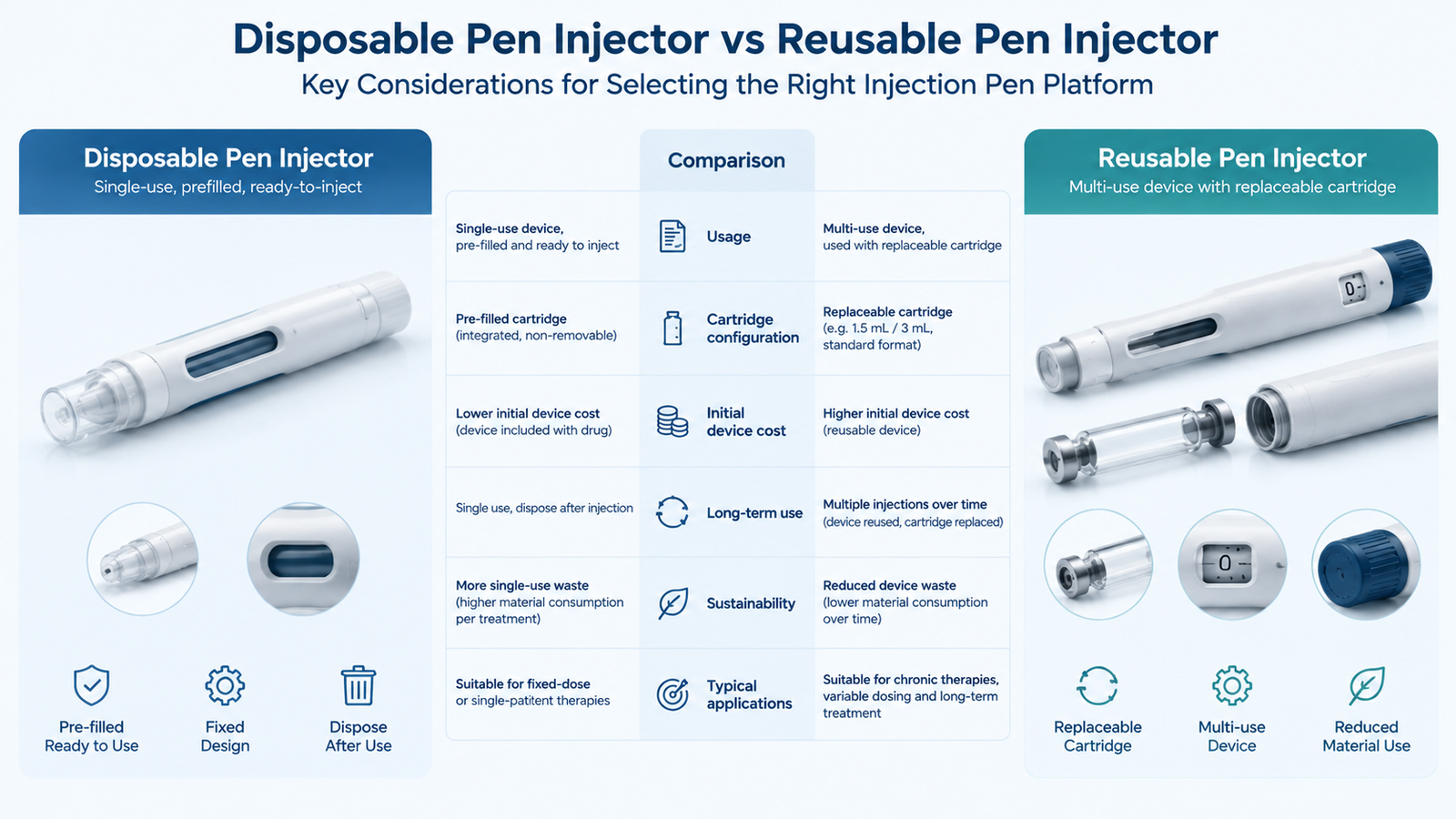
Choosing between a disposable pen injector and a reusable pen injector depends on project objectives, therapy characteristics, and market considerations.
Disposable pen injector
Disposable systems are commonly considered when simplicity, convenience, and predefined dosing are priorities.
Potential advantages include:
—— simple user operation
—— no cartridge replacement process
—— integrated delivery experience
However, projects should also consider supply requirements, packaging strategy, and long-term cost implications.
Reusable pen injector
Reusable platforms may be considered for therapies requiring repeated administration over longer periods.
Potential advantages include:
—— reduced device waste
—— cartridge replacement flexibility
—— long-term user familiarity
However, reusable systems may require additional considerations regarding durability, cleaning instructions, and user handling.
There is no universal solution. Different drug products and commercialization strategies require different approaches.
3.4 Dose Setting and Accuracy Requirements
Dose requirements should be defined before selecting an injection pen platform. The appropriate device configuration depends on whether the drug requires a fixed dose, variable dose, or multiple dosing regimens.
Fixed-dose delivery
Fixed-dose systems can be appropriate when the prescribed dose remains consistent for each administration. The simplified dosing mechanism can reduce the number of user decisions required during injection.
For these applications, development teams should consider:
—— Required dose volume
—— Dose accuracy
—— Dose confirmation
—— Injection completion feedback
—— Compatibility with the intended cartridge
Variable-dose delivery
Variable-dose pen injectors provide greater flexibility when patients may need to select different doses.
This type of functionality can be relevant for therapies where dosing may be adjusted during treatment or where multiple dose levels are administered using the same device platform.
Dose-setting mechanisms may incorporate:
—— Numeric dose displays
—— Audible click counting
—— Tactile feedback
—— Mechanical dose limitation
—— Electronic dose setting
For therapies such as insulin, GLP-1-based treatments, hormones, and certain biologic medicines, dose-setting requirements should be evaluated alongside the drug formulation and treatment protocol.
Importantly, dose-setting capability should not be evaluated in isolation. The selected device should provide an appropriate combination of dose accuracy, user feedback, mechanical performance, and compatibility with the primary container.
3.5 Injection Mechanism and User Experience
The injection mechanism determines how the drug is delivered and has a direct relationship with both device performance and user interaction.
Depending on the project, development teams may evaluate manual, spring-driven, or automatic injection mechanisms.
Manual injection systems
Manual pen injectors rely primarily on the user's action to initiate and complete the injection.
These systems can offer relatively straightforward mechanical configurations and may be appropriate where the required injection force is manageable for the intended user population.
Spring-driven injection systems
Spring-driven mechanisms use stored mechanical energy to assist drug delivery.
Compared with purely manual systems, a spring-driven mechanism can provide more controlled injection behavior and may be considered when injection force or delivery consistency is an important development parameter.
However, spring characteristics, injection speed, force profile, and formulation viscosity all need to be evaluated together.
Automatic injection systems
Autoinjectors can automate some or all of the injection sequence, depending on the device architecture.
Potential functions include:
—— automated needle insertion
—— automated drug delivery
—— injection completion indication
—— reduced manual steps
For certain therapies, automation may help simplify the administration process. However, additional mechanical complexity can also introduce additional development and validation considerations.
Human factors and feedback
Human factors should be considered as part of injection device selection rather than added after the mechanical platform has already been chosen.
Feedback mechanisms may include:
Audible feedback
Clicks or sounds can provide confirmation that a dosing or injection step has occurred.
Tactile feedback
Physical resistance or movement can provide information during dose setting or injection.
Visual feedback
Dose displays, windows, indicators, or completion signals can provide visual confirmation.
The appropriate combination depends on the intended users, administration environment, treatment frequency, and device architecture.
A technically functional injection device may still create usability challenges if the user cannot easily determine whether the correct dose has been selected or whether the injection has been completed.
3.6 Regulatory and Development Considerations
Regulatory considerations should be incorporated into drug delivery device selection from the early development stage.
For injection devices, ISO 11608 is an important reference for evaluating requirements related to needle-based injection systems and their components. Depending on the specific device architecture, applicable requirements may cover areas such as container compatibility, dose accuracy, functional performance, and testing.
The exact regulatory pathway will depend on the drug, device, intended market, and combination product strategy.
Development teams may therefore need to consider:
—— Device performance requirements
—— Primary container compatibility
—— Needle compatibility
—— Dose accuracy
—— Functional testing
—— Design verification
—— Risk management
—— Technical documentation
—— Human factors evaluation
The device platform should be selected with these requirements in mind.
Early consideration of relevant standards can support smoother device development by identifying potential technical and documentation requirements before the project progresses too far.
It is also important to distinguish between selecting a platform and demonstrating final regulatory compliance. A device platform that appears technically suitable still requires project-specific evaluation, verification, and documentation.
Common Mistakes Companies Make When Selecting Injection Pen Suppliers
Selecting an injection device supplier is not simply a procurement decision. For pharmaceutical and biotechnology projects, the supplier relationship can affect technical development, primary packaging integration, documentation, and long-term supply planning.
Several common mistakes can create avoidable problems.
Mistake 1: Choosing Only Based on Unit Price
Unit price is an important commercial consideration, but it should not be the only selection criterion.
A lower initial price may be associated with limitations in areas such as:
—— customization
—— available configurations
—— technical documentation
—— primary packaging compatibility
—— supply flexibility
—— development support
A small difference in device price can become less significant if additional engineering work, compatibility testing, or platform changes are required later.
A more useful procurement approach is to evaluate the total project requirements rather than comparing unit prices alone.
Mistake 2: Ignoring Drug-Device Compatibility
Another common issue is selecting an injection pen before fully understanding the drug formulation.
A device may appear suitable based on its general specifications but perform differently when combined with the actual formulation, cartridge, and needle configuration.
Particular attention should be given to:
—— formulation viscosity
—— injection volume
—— required injection force
—— delivery speed
—— cartridge dimensions
—— needle characteristics
The drug-device combination should therefore be evaluated as a system.
Mistake 3: Selecting a Device Before Defining Project Requirements
Different projects have different requirements.
For example, a project may require:
—— a fixed-dose disposable pen
—— a variable-dose reusable platform
—— a spring-driven mechanism
—— an automated injection system
—— a 3 mL cartridge pen injector
—— a device suitable for a specific target market
If these requirements have not been defined, comparing individual devices can become inefficient.
A structured requirements list should ideally be prepared before supplier discussions begin.
Mistake 4: Not Considering Long-Term Supply Capability
A device that works during early development may eventually need to support larger commercial quantities.
Procurement teams should therefore consider:
—— expected annual volume
—— supply continuity
—— component availability
—— lead times
—— quality documentation
—— customization requirements
—— secondary supply options where appropriate
The commercial strategy should be considered alongside the technical evaluation.
Ultimately, a suitable drug delivery solution requires evaluation of the device platform, primary packaging, technical requirements, supply considerations, and project objectives together.
How BioauraHealth Supports Injection Pen Development
BioauraHealth provides drug delivery solutions for companies seeking suitable injection pen platforms and related primary packaging options.
Rather than positioning itself as a direct manufacturer, BioauraHealth works as a drug delivery solutions provider, helping connect project requirements with appropriate device platforms and qualified supply chain resources.
Depending on project requirements, the solution scope may include:
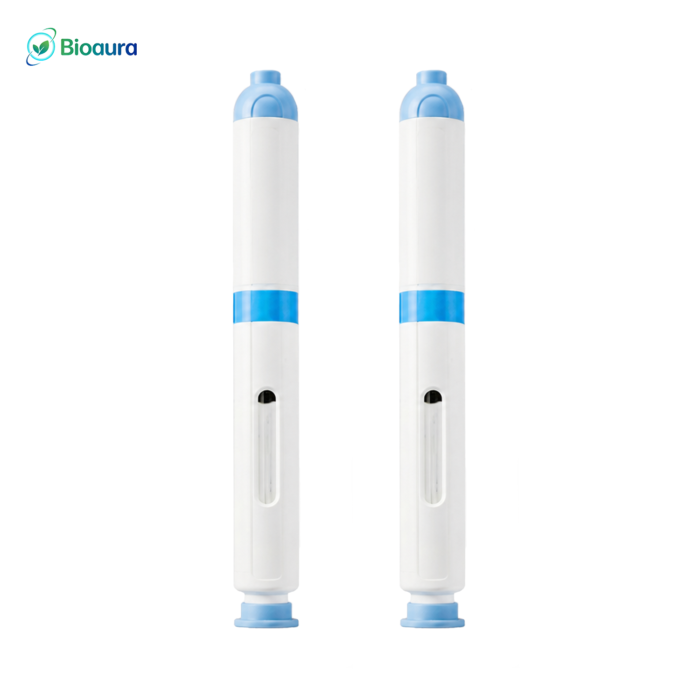
—— Disposable pen injector solutions
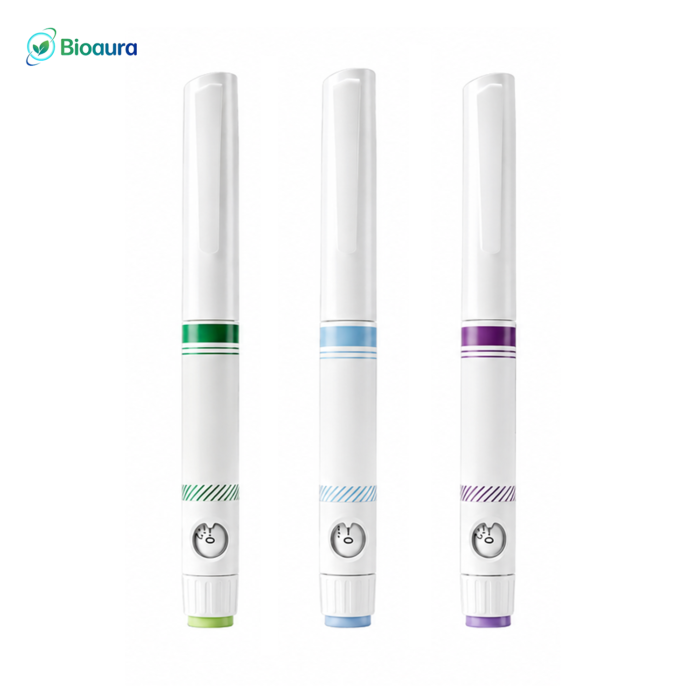
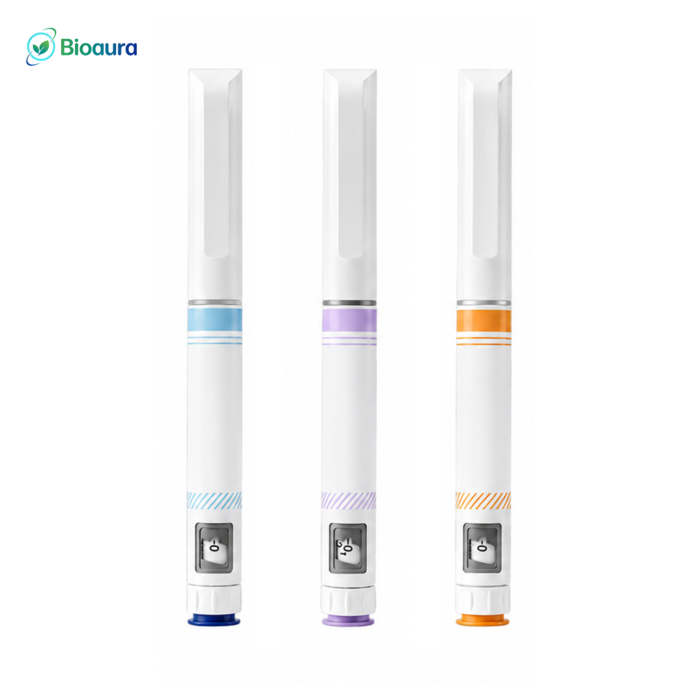
—— Reusable pen injector platforms
—— Autoinjector solutions
—— Cartridge and primary packaging options
—— Supplier integration support
—— Project requirement evaluation
This approach is particularly relevant when a drug development project involves multiple components that need to work together.
For example, selecting a pen injector may require simultaneous consideration of the drug formulation, cartridge, needle, dosing requirements, user interaction, and intended market.
BioauraHealth can help organize these requirements and explore suitable options through its supply chain resources.
The objective is not simply to identify an injection pen, but to consider the broader development ecosystem surrounding the device.
Beyond the Device: Your Development Ecosystem
A drug delivery project often involves more than one component or supplier.
The overall system may include:
Drug → Primary Container → Needle → Injection Device → Packaging → Supply Chain
Coordinating these elements early can help development teams identify compatibility requirements and potential technical gaps before moving into later project stages.
For pharmaceutical companies, biotechnology companies, and drug delivery developers, this integrated approach can provide a more structured starting point for evaluating injection device options.
Frequently Asked Questions About Pen Injector Selection
What information should I provide when selecting a pen injector?
The more clearly the project requirements are defined, the more effectively a suitable device platform can be evaluated.
Useful information includes:
—— Drug formulation characteristics
—— Formulation viscosity
—— Dose volume
—— Required dose increment
—— Cartridge type and size
—— Needle requirements
—— Intended user population
—— Target market
—— Expected project quantity
—— Disposable or reusable requirements
—— Desired injection mechanism
For early-stage projects, not every parameter needs to be finalized. However, providing the known technical requirements can help narrow down suitable device platforms.
Can pen injectors be used for high-viscosity formulations?
Potentially, but suitability depends on the specific formulation and device configuration.
High-viscosity formulations can require greater injection force and may therefore place different demands on the drive mechanism, needle, cartridge, and overall device design.
The appropriate approach is to evaluate the actual formulation characteristics together with the intended device configuration rather than assuming compatibility based on viscosity alone.
Testing and project-specific technical evaluation may be required before a final device selection is made.
What is the difference between disposable and reusable pen injectors?
A disposable pen injector is generally designed for a single usage cycle, while a reusable pen injector is designed to be used repeatedly with replacement cartridges or drug containers.
Disposable systems may simplify the user experience and device handling, while reusable platforms can be considered for therapies involving repeated long-term administration.
The appropriate choice depends on factors including treatment duration, dosing requirements, commercial strategy, sustainability considerations, and user requirements.
Do pen injectors support 3 mL cartridges?
Many pen injector platforms are designed around standardized cartridge formats, including 3 mL cartridges.
However, compatibility should always be confirmed for the specific combination of device, cartridge, stopper, needle, and formulation.
A cartridge's nominal volume alone does not establish complete device compatibility.
For this reason, teams evaluating a 3 mL cartridge pen injector should review the relevant dimensional, mechanical, and functional requirements before selecting a platform.
How early should companies evaluate injection devices?
Injection device evaluation should begin as early as practical in drug development, particularly when the final product is expected to be delivered through a combination product.
Early evaluation can help identify potential issues related to:
—— cartridge compatibility
—— injection force
—— dose requirements
—— device usability
—— regulatory considerations
—— supply requirements
Waiting until late-stage development to select a device can reduce flexibility if substantial changes to the formulation, primary packaging, or delivery system become necessary.
What is a cartridge pen injector?
A cartridge pen injector is an injection device designed to deliver medication from a cartridge-based primary container.
The cartridge typically serves as the drug container, while the pen mechanism controls dose setting and drug delivery.
A complete cartridge pen injector system should therefore be evaluated as a combination of the drug formulation, cartridge, needle, and injection device rather than as a standalone mechanical product.
What should pharmaceutical companies consider when choosing an injection device supplier?
Supplier evaluation should include both technical and commercial factors.
Companies may consider:
—— Device platform suitability
—— Primary packaging compatibility
—— Technical documentation
—— Customization capabilities
—— Quality requirements
—— Supply capacity
—— Lead times
—— Target market requirements
—— Long-term project support
The supplier's role within the broader drug delivery development process should also be considered.
Conclusion
Selecting an injection pen for an injectable drug project requires more than comparing device specifications or unit prices.
The appropriate platform needs to be evaluated against the drug formulation, injection volume, required force, dose-setting requirements, cartridge configuration, needle system, user experience, regulatory considerations, and long-term commercialization objectives.
For this reason, injection device selection should be treated as part of the overall drug delivery strategy, rather than as an isolated procurement activity.
Early evaluation can help pharmaceutical and biotechnology companies identify compatibility requirements, compare different device architectures, and reduce the risk of major changes later in development.
BioauraHealth supports companies evaluating injection pen solutions by helping connect project requirements with suitable device platforms, primary packaging options, and qualified supply chain resources.
If you are evaluating an injection pen solution for an injectable drug project, BioauraHealth can help you explore suitable device platforms and primary packaging options based on your technical and commercial requirements.
Discuss Your Injection Device Requirements
Comment (1)